The most buzzed-about musical of the fall so far isn’t a big Broadway musical with a gigantic cast. Instead, it’s a musical running Off-Broadway in a 400-seat house, with a cast of just two actors—who sing, rap, and play their own instruments. It’s called Mexodus, and it’s utterly astounding. The New York Times called it an “electrifying theatrical experience” while the Daily Beast asks: “Could this show be the next Hamilton?”
Even before it opened at the Minetta Lane Theatre, Mexodus was extended (it's now been extended for the second time to November 1). The hip-hop musical based on real events also has a tour in the works, and it will be released as an Audible Original June 18, 2026. For Nygel D. Robinson and Brian Quijada, two performers who have been making theatre for over a decade, this moment (and the Hamilton comparison) has been a vindication.
“Honestly, I'm honored,” says Quijada, smiling broadly. “There was a quote once that said, ‘If you like Hamilton, you'll probably like this.’ If it's an entry point to getting people to see us...if you're a musical theatre fan, and you don't really listen to hip-hop, you should come see us. I'm very honored by it, and hope [Hamilton creator Lin-Manuel Miranda] comes.”
Robinson is a bit wary, saying, “When certain people make the comparison, they're just seeing two Black and brown people rap. That doesn't make it Hamilton…it couldn't be more different.” Though Robinson does add that given the opportunity, he wouldn’t mind playing a Founding Father, saying playfully, “I'm going to call my agent today and be like, ‘Girl, go to Hamilton.’”
Before these two do Hamilton (or an In the Heights revival, which is their real goal, they say), they’re busy with Mexodus, a new musical where every night, they’re building the story and the music from the ground up. Mexodus follows a formerly enslaved man in Texas who, instead of going north, runs south to Mexico. Historically, it’s estimated 4,000 to 10,000 people escaped bondage to Mexico. This New York run is the fourth time Quijada and Robinson have performed Mexodus together (having had previous runs in Baltimore, Maryland; Washington, D.C.; and Berkeley, California).
When the two began working on it five years ago, they were still relative strangers. Back in February 2020, Quijada and Robinson were both speakers at a conference for actors who were also musicians. The two immediately got along: they both played multiple instruments, they loved hip-hop and musical theatre, and they grew up going to church.
After the conference, the two were hanging out at Quijada’s small studio apartment “just rapping and vibing and stuff,” recalls Robinson. “But he was like, ‘Have you ever heard of the Underground Railroad that led south to Mexico? And I was like, ‘oh shit. That does make sense.’”

Quijada had seen a History.com article about the Underground Railroad to Mexico on Facebook. “I remember reading that and thinking about my parents and their story of crossing the border,” says Quijada. He jotted that factoid down in 2017 as an interesting idea for a potential piece, but didn’t touch it until 2020, after he met Robinson, because, “I'm not going to write a slave narrative alone. That's not my story.” Quijada’s parents are from El Salvador.
During the COVID-19 pandemic, as the theatre industry was shut down, Robinson and Quijada passed the time writing songs for Mexodus, bringing in their love of hip-hop and also gospel and bolero. The goal was to have enough songs to do a concert in 2021 at the development hub New York Stage and Film. Scholarship about the Underground Railroad to Mexico was scarce, but the two were able to find some compelling stories—such as the story about a slave who crossed the Rio Grande on a bale of floating cotton. Admits Robinson: “We don't know if it's a folk tale that happened for real, for real. But just the idea that the thing that enslaves you can be the thing that sets you free—that is the bigger metaphor.”
In Mexodus, that is how Robinson’s character Henry crosses the river from Texas to Mexico. Robison plays Henry while Quijada plays Carlos, a former Mexican army medic in the U.S.-Mexican War; Carlos finds Henry and the two form a tentative friendship.
While the story is naturally compelling, a fictional story set against the backdrop of a history not taught in schools, it’s the way that Quijada and Robinson decided to tell it that is the key to the piece’s brilliance. The two act while singing and playing every musical instrument in the show. There’s no backing orchestra here—it’s just these two performers, some guitars, a bass, a piano, a trumpet, and drums. Oh, and the most important instrument of all: a looping station, which allows them to record a musical phrase and then play it back in repeat, so they can then layer multiple instruments on top of each other. This means that Quijada and Robinson are creating the arrangement for each song live on the spot every night.
Mikhail Fiksel did the sound design and helped the two figure out to pull off the musical feat, which requires 20 microphones, and 16 recording buttons placed all around the stage that they can hit to record a musical phrase. There’s also a backstage audio engineer Jordan Del Pino who keeps everything running, and can also replay different recorded segments. Notes Quijada with obvious pride: “There's moments when we recall something, like the thunder made in ‘Wade in the Water’ is the thunder that begins the flood.’”
The musical complexity of Mexodus means that it doesn’t always go smoothly, notes Robinson. “It's so complicated and the margin for error is so thin, like, if we hit [a button] a millisecond too late, we could derail three songs. I wish I was being hyperbolic. There have been some things that have messed up on our part, even in this run—like running up the steps and accidentally hitting the button and not meaning to. It's like, 'Why did that not record?'” They asked me if I noticed a mistake that occurred on the night I went to the show. I can honestly say that no, I couldn’t tell, because I was so swept away by the music I was hearing.

The joy of the piece isn’t just seeing the two performers tell a compelling story; it’s seeing how they tell it, and hearing the layers of music come together one-by-one until it becomes a wave of harmonious sound. And it is that music which makes the wisdom delivered by Quijada and Robinson all the more bittersweet, such as in the line “liberation in this nation is still being confronted when Black and brown bodies continue being hunted.” The two admit that they wish the piece that they wrote five years ago wasn’t so sadly relevant now.
“I would rather it not be this way, that the American brown immigrant is so demonized in this country,” Quijada says, with some hesitancy and sadness. “What's nice in this time of very little hope in the tank is that we get to go up on stage every night and be speaking truth to power. I think a lot of people that feel this hopelessness, are finding this show to be the release that we all feel honestly. And so, I have very complicated feelings about it.”
Adds Robinson: “I think our lot in life is not to be on the front lines of a protest. This is our contribution to all that. We’re hoping out of the 300 people that are seeing it every night, somebody is a little bit changed by what they heard. And if we can do that little thing enough, those small moments will end up becoming a big moment.”
In the meantime, Quijada and Robinson intend on continuing to perform Mexodus—though they do have understudies who have stepped in once. But the two hope that the musical will live on after they are done performing it, as a testament to the resilience of the Black and brown people who helped create America, and also a reflection of a life-changing friendship.
“If we ain't tired of each other yet, it will never happen,” says Robinson affectionately. “We've been around each other more than our partners.”
Says Quijada, with excitement: “Nygel and I, our friendship has blossomed throughout the process of making Mexodus. I want to take Mexodus to Mexico with Nigel.”
Adds Robinson: “I see us on a beach in Mexico drinking margaritas and cheers-ing to Mexodus. We're gonna do it.”
Click here for tickets to Mexodus.
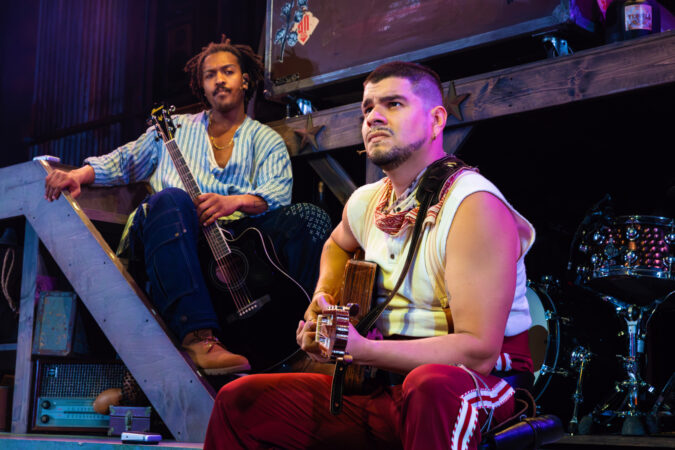
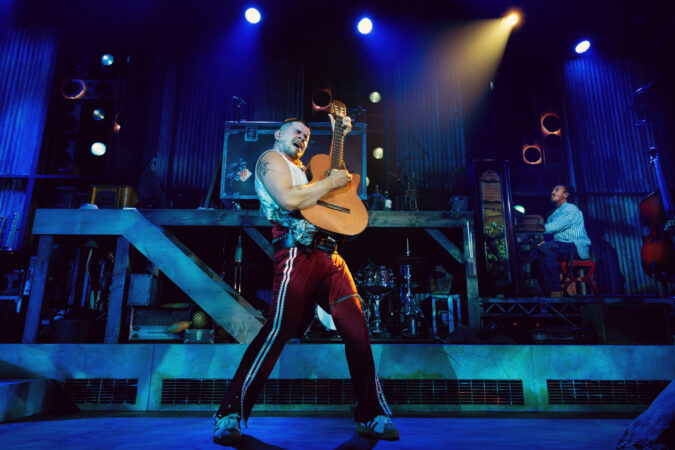
Brian Quijada in Mexodus
Nygel D. Robinson and Brian Quijada in Mexodus
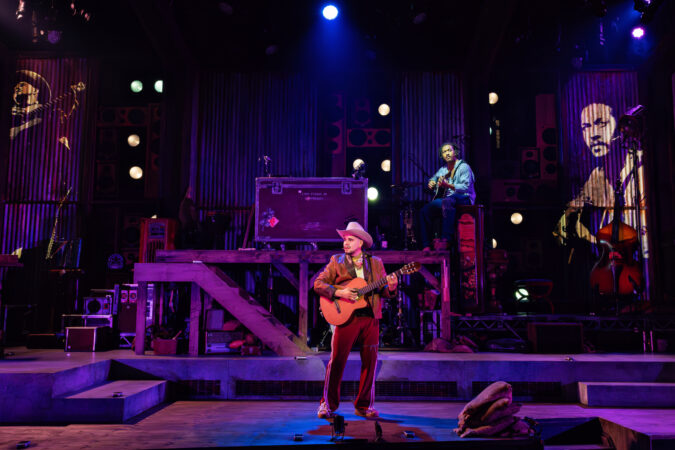
Brian Quijada and Nygel D. Robinson in Mexodus

Brian Quijada and Nygel D. Robinson in Mexodus
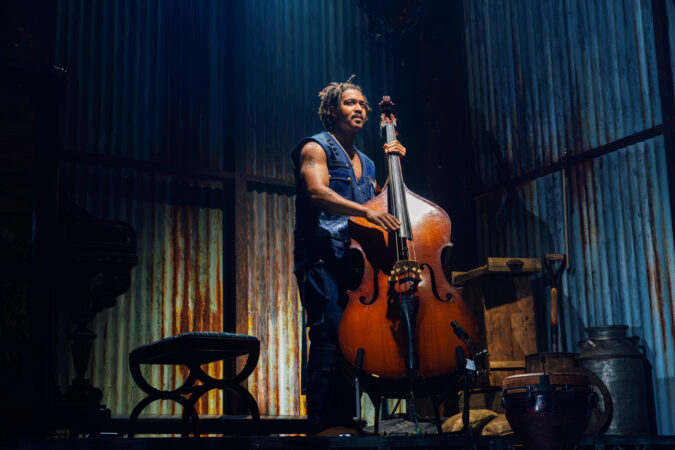
Nygel D. Robinson in Mexodus
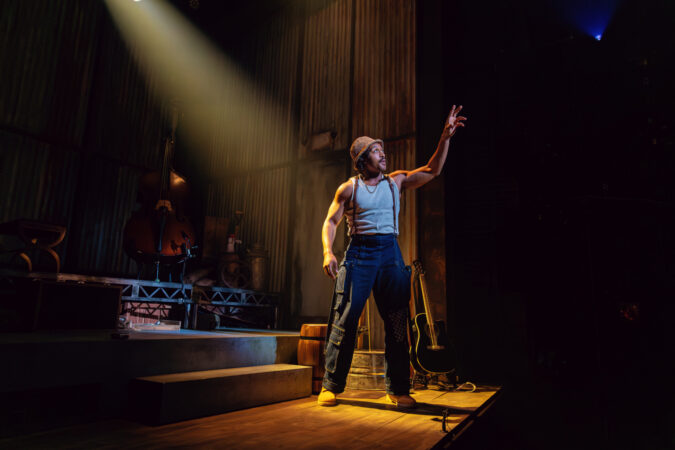
Nygel D. Robinson in Mexodus
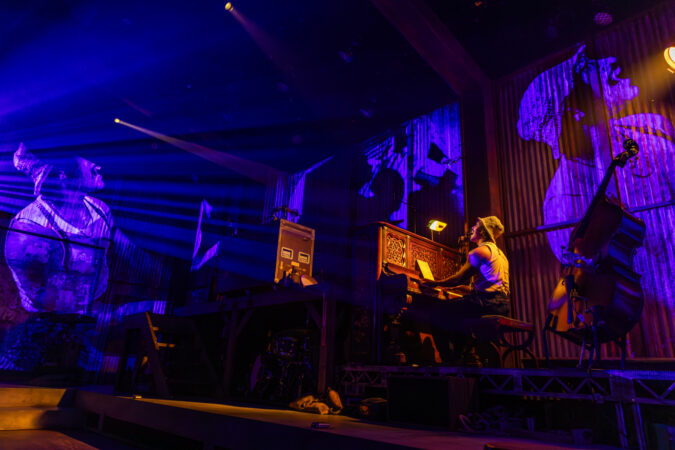
Nygel D. Robinson in Mexodus
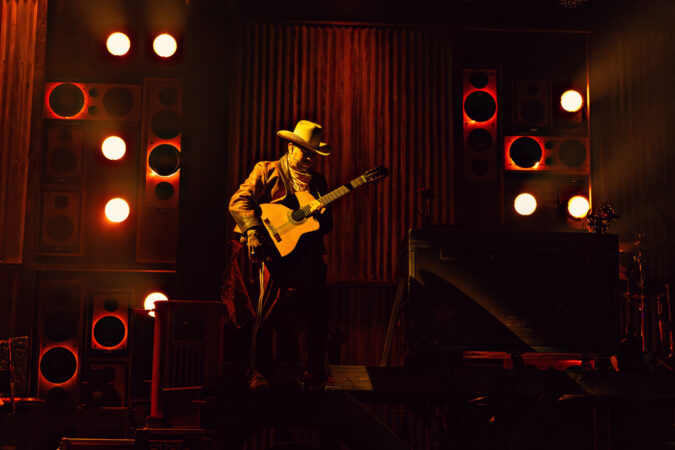
Brian Quijada in Mexodus