


The 2025 Tony Awards had one of the most competitive Best Musical and Best Play categories in recent memory. It was the rare time the consensus was: “If any of these shows win, we won’t be upset,” showcasing just how strikingly original and memorable all of the shows recognized were. It was also an indicator of just how rich 2025 was for theatre in New York.
Below are 15 shows the Playbill editorial staff saw this year that we unequivocally loved. But we will preface this list by saying that it is not comprehensive. There are shows we loved but we didn’t include because we already recommended them in previous round-ups or they premiered in 2024: Oh, Mary!, Dead Outlaw, Maybe Happy Ending, and Ragtime.
Those productions aside, here are the 15 best plays and musicals of 2025 on Broadway and Off-Broadway.

Bat Boy
Hold me, Bat Boy…and please don’t ever let me go! New York City Center’s Gala presentation of Bat Boy, a cult favorite for decades, understood the assignment: The joke only works if you take it seriously. And no one took it more seriously than this cast and production. It didn’t sand down the musical’s glorious weirdness; it polished it and put it in front of a large audience at New York City Center. Taylor Trensch delivered a performance of such focused physicality, comedic precision, and so much heart that you almost forgot the pointy ears and unquenchable thirst for blood. Trensch proved once again what a star he is. And, of course, you could not possibly talk about this production without mentioning Kerry Butler. While being a consistent Broadway favorite for decades, Butler’s powerhouse performance was a clear reminder of her insane talent. She has an ability to effortlessly balance a calm, almost disarming, sincerity, but belt so furiously that one worries for the roof’s infrastructure. Oh, and this company! Filled to the brim with Tony winners, nominees, and standouts, they attacked the material (and that amazing opening number) with the kind of conviction that makes satire feel communal rather than smug. And lastly, I have to mention Alex Timbers’ direction. He masterfully leaned into the camp with clear-eyed enthusiasm. It was bold, playful, and unapologetic, but never used irony as a hiding place. The tenderness was allowed to sit right next to the absurdity (sometimes uncomfortably), and that friction is where the production really lived. You went in expecting a cult favorite revival and left thinking, against your will, about belonging, belief, and why a half-bat boy singing pop-rock might still be one of theatre’s most effective mirrors. —Jeffrey Vizcaíno

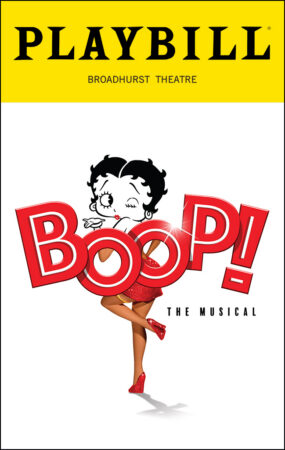
BOOP! The Betty Boop Musical
This choice turned out to be a rather surprising one when I revealed it to my fellow Playbill editorial staffers, which I think means they are too snobby for their own good. No, we’re not likely to be studying the dramaturgy of BOOP! in a musical theatre writing course. But BOOP! was fun from beginning to end. Director-choreographer Jerry Mitchell’s track record speaks for itself—the man knows how to deliver an entertaining evening in the theatre and has the Tony Awards to prove it. In Mitchell’s hands, BOOP! was a colorful, funny, dazzling spectacle from top to bottom. Did I always understand what was going on? No—and it didn’t matter! It didn’t hurt that it also had in its title role one of the best Broadway debuts I’ve ever seen: Jasmine Amy Rogers. The way she was able to bring the animated style of Betty Boop to her real, human body on stage was unreal—as was her ever-charming take on what could have so easily been a cloying, annoying character. BOOP! may have turned out to be short-lived on Broadway, but it was truly one of the best evenings I spent in the theatre in 2025. Actually, it was two of the best evenings I spent in the theatre in 2025—because I went back for seconds! —Logan Culwell-Block

Buena Vista Social Club
Okay, before I get accused of being biased as a fellow Latin…wait, no. Bring it on. I’ve never been prouder to see Latinos and Latinas bringing the most authentic representation to Broadway. Buena Vista Social Club earned its place as one of the best new Broadway shows of 2025 by putting Cuban music, dance, and storytelling unapologetically at the center and daring the rest of Broadway to keep up! From the moment the band (which is so incredible that they were honored with a special Tony Award because, honestly, how could they not?) takes over the stage, the show makes its priorities very clear: rhythm, movement, and soul first…everything else after! The choreography, created by married duo Patricia Delgado and Justin Peck—which justly snagged the Tony Award for Best Choreography for their vibrant, culturally rich work—doesn’t just accompany the music but amplifies its spirit, pulling the audience into motion whether they planned on participating or not. And my favorite part about the production? It offers no subtitles and no linguistic handholding for the all-Spanish lyrics. Somehow that becomes its greatest flex, because the longing, joy, regret, and pride inside each song land with total clarity anyway.
You don’t “watch” Buena Vista Social Club so much as you feel yourself gradually leaning forward, swaying, and realizing that understanding isn’t always verbal. Sometimes it’s just rhythm, finding your body before your brain can intervene. —Jeffrey Vizcaíno

English
When I heard that English by Sanaz Toossi was going to be on Broadway, I (and Jeffrey Vizcaíno) cheered with joy. As people who grew up in bilingual households, we had both loved the play when we saw it in 2022 and promptly became fans of Toossi in her boundary-breaking playwriting debut. English may be set in a classroom in Iran, and it’s about Iranians learning a foreign language (and full disclosure, I’m not Iranian, I’m Vietnamese). But as someone who also learned English as a second language, I deeply understand what it is to have a separate identity when speaking another language and how profoundly challenging it is to assimilate to a new culture while trying to preserve your own heritage. When Marjan in the play (a bravura performance by Marjan Neshat) says the two languages war in her head and she can’t tell what is winning, I feel that struggle. The typical immigrant narrative portrays assimilation, learning English, as a resounding victory. But Toossi’s masterwork of a play shows the sacrifice and the melancholy that comes from needing to give up a part of yourself in the name of “progress”; something is gained but a piece of you is also lost. In English the things the characters could not say are as meaningful as what they can say. Yet English isn’t sentimental, and it is not trying to teach you something about Iran or the Middle East or immigration; it just lets the characters be their funny, witty, abrasive, deeply human selves, and you can’t help but delight in the time you spend with them. English leaves you realizing there are things that connect us beyond language and borders—it’s a desire to explore and push ourselves further, even when it scares us. You will also leave with a deeper appreciation of Ricky Martin’s pop hit “She Bangs.” —Diep Tran

WICKEDT
Fagtasia is an immersive, queer parody show created by drag performer Baby Love. By reimagining beloved works through a queer lens and utilizing primarily LGBTQIA and BIPOC performers and artisans, Fagtasia’s productions accomplish what so many commercial productions claim to do: create impactful, authentic theatrical experiences by and for the communities they allege to represent. Stepping down from my soapbox in 3, 2, 1. . . Okay!
Fagtasia’s production of WICKEDT (a parody of the first Wicked film in which both Elphaba and Glinda are trans women) marked the first time I screamed for joy, shed tears of joy, and felt pride in myself while at work (I was a deckhand). And it was fun. Imagine a fun night at the theatre! Fagtasia has elevated its performances from its nightclub beginnings to a proper proscenium while maintaining the whimsy and charm of cardboard set pieces. Rumor has it Baby Love will be back at The Second City in Williamsburg in spring 2026 for She-Cago (get it?). So, shake out your wigs, press on your nails, and submit to the magic and pleasure of Fagtasia. —Dylan Parent

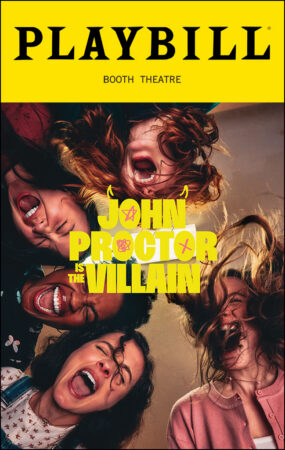
John Proctor Is the Villain
Few shows defined Broadway in 2025 as powerfully as John Proctor Is the Villain. Led by Stranger Things star Sadie Sink, the production drew a younger, energized audience to Broadway—and to the Booth Theatre’s stage door. The story felt deeply personal to me, as someone who grew up in the South and graduated just a year before the play is set. It masterfully captures what it was like coming of age at the dawn of the #MeToo movement, while being asked to study heteropatriarchal works like The Crucible during such a fractured and emotionally charged time. It reflects the confusion, anger, and awakening that defined that moment for so many young people. John Proctor Is the Villain is a beautiful and necessary piece of theatre—one that not only shows how far we have come since 2018, but also how far we still have to go. We are still searching for that green light. —Meredith Ammons
Little-Fang.jpg)
Liberation
On the page, Liberation by Bess Wohl shouldn’t work as well as it does. The play is a structurally amorphous: It is about a woman living in 2025 trying to understand her deceased mother Lizzie by piecing together the details of her mother’s second wave feminist past—in many scenes she actually pretends to be her mother. It goes back and forth in time, sometimes within a single phrase. And it mainly takes place in a high school gym in Ohio, with scenes mainly of women talking to each other. But it still took my breath away both times I saw it, because I was afraid if I exhaled, I would also start sobbing. It also boasted one of the most talented ensembles currently working on Broadway, led by the magnificent Susannah Flood as the narrator/Lizzie—it's a group of women so richly drawn that you could watch a play about any one of them. Maybe it’s because as a woman, watching a play about women striving to create change in their own lives, I understand the weariness within every woman on that stage. But it’s also because, in its atypical structure, Liberation is a funny and touching exploration about what it is to be a human striving to be better in an imperfect society. That sometimes the best thing we can do is try to create change in however small ways that we can. And if we all do that, little by little, it will all add up. In today’s frustrating world, Liberation was exactly the balm I needed and that is why for me, it’s one of the best plays of 2025. —Diep Tran

Little Bear Ridge Road
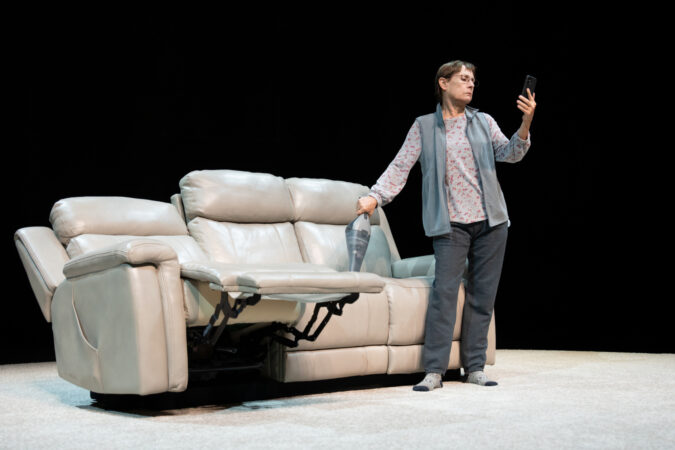
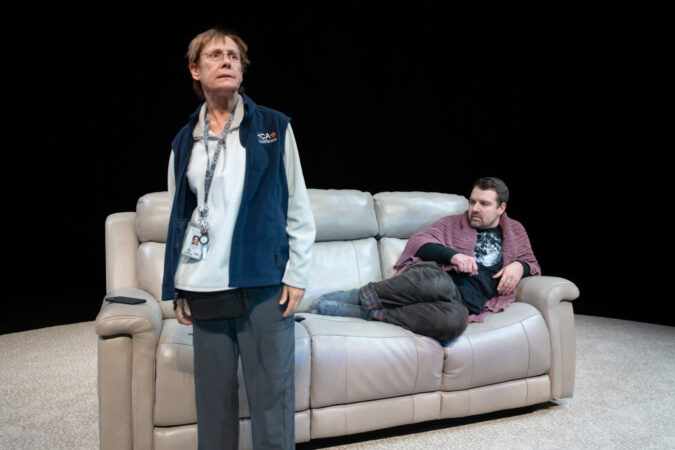
It’s certainly shaping up to be the season of Laurie Metcalf. The actress, best known for her Emmy-winning work on TV’s Roseanne, recently starred in the intimate drama Little Bear Ridge Road, which marked the Broadway playwriting debut of The Whale writer Samuel D. Hunter. Written for Metcalf, the role of the dying nurse Sarah was perfectly suited to Metcalf’s many strengths, allowing the stage and screen star to draw a huge laugh one moment and punch the audience in the gut the next. It's a beautifully built piece that unfolds slowly, allowing theatregoers to care for this no-nonsense nurse, whose life is disrupted not only by a terrible disease but the arrival of her estranged nephew; it’s a family with a long, complicated history. Micah Stock, in a welcome return to Broadway, was also thoroughly compelling as Ethan, a wounded, struggling writer seemingly unable to face his past or future. His performance was so real that when he mistreated his new, super-sweet boyfriend—an impressive Broadway debut from John Drea—one had the impulse to tell the latter to run. Meighan Gerachis also gave a brief but impactful performance in the play’s final scene, in which Ethan’s discovered writing has the potential to not only bring him back to life, but also provide much-needed meaning for Sarah. The limited engagement recently closed, but Metcalf fans have reason to celebrate. She’ll be back later this season in the recently announced revival of Arthur Miller’s Death of a Salesman opposite fellow Tony winner Nathan Lane. Two Laurie Metcalf shows in one season, what a time to be a theatre fan! —Andrew Gans

Masquerade
Phantom of the Opera phans may have noticed that the vast majority of Playbill’s Masquerade coverage this year has been written by yours truly. So, it won’t be a surprise in the slightest that Masquerade is my favorite show of the year. Masquerade has thoroughly transformed Andrew Lloyd Webber’s musical; it’s not just a revival, it’s an entirely new creation with six new Phantoms and surely more to come. There is also so much more lore and character depth. It’s an experience that feels like it wasn’t just designed for Phantom fans, but by a phan. Most of all, I’m so thrilled that Phantom is having a cultural moment again thanks to all the hype around Masquerade. In the years prior to Phantom closing on Broadway, it felt like—though the musical didn’t lose its hardcore fanbase—there wasn’t much growth in the phandom. Writing about how much I love the show is and always has been a highlight of my career. But for a long time, it felt like an echo chamber. Now, it finally feels like everyone else is as excited as I am about this masterpiece of a musical, and that’s a great reason to rejoice at these paper faces on parade. —Meg Masseron

Mexodus
It is a rare and powerful feeling to watch a show and realize you are witnessing something truly special. That was exactly my experience when I finally had the chance to see Mexodus, the new Off-Broadway musical by Nygel D. Robinson and Brian Quijada that had a too-short run at the Minetta Lane Theatre. Mexodus tells the story of Henry, an escaped enslaved man, and Carlos, a Mexican farmer and veteran, whose lives unexpectedly intersect—shining a light on a rarely explored chapter of American history. What makes Mexodus so extraordinary is how deeply it understands the role of music in shaping culture and identity. The musical does not simply use music as accompaniment; it uses it as storytelling. Through a stunning blend of Mexican guitar, gospel, and rap, the show celebrates not one culture, but two—woven together in perfect harmony. Each musical style feels purposeful, honoring the histories, struggles, and resilience of both men. One of the most moving moments occurs when Henry helps Carlos symbolically restore his farm through a guitar duet. Without needing words, the scene captures the unifying power of music and demonstrates how shared culture can heal, connect, and rebuild. Mexodus is a true work of art—bold, heartfelt, and deeply necessary. I cannot wait to see how far this musical goes. —Meredith Ammons

The Picture of Dorian Gray
As a lifelong Oscar Wilde fan, and devotee of the aestheticism movement, I was thrilled when Kip Williams’ “solo” adaptation of Wilde’s novel The Picture of Dorian Gray came to Broadway. The production, which starred Sarah Snook (in a deserved Tony Award-winning performance) as the 26 different characters in Wilde’s novel, held a magnifying glass to Wilde’s tale of morality, indulgence, and the distortion of self. It expanded his themes out until its audience was enveloped in a kaleidoscope of excess. In an era where screens and projections onstage often feel like lazy gimmicks, Williams’ use of them both felt thrilling and new, incorporating technology in a way that was undeniably theatrical, rather than forcing the art of film onto the stage. This was truly a Dorian Gray for the digital age, and I pray that the upcoming film adaptation is able to preserve the magic Snook harnessed onstage. —Margaret Hall

Prince Faggot
When this play (by Jordan Tannahill) was announced, I wondered if I was actually interested in the concept (what if the heir to the British monarchy was a gay man?) or if I just liked the title. Then it started performances, and all I heard about it was how much gratuitous nudity it had. When I finally got to see it, I learned that the amount and gratuitousness of said nudity had been overstated (that aspect of Prince Faggot is the last thing on which one should focus). Tannahill’s play has a somewhat incendiary premise (Prince George is, after all, a very real and very young child), but he uses it as the jumping off point, providing a fascinating and effective meditation on what being gay does to your life experience. I found myself thinking so much about how being gay flies in the face of the de-facto assumptions and expectations parents make about their children and what their life will look like—and how that affects the experience of our actual lives as those gay children. There’s the surface-level things you might expect in this general area (disagreements on how one’s life should be led). But Prince Faggot also delves into things that get discussed way less often, primarily the pain and anguish of always having to navigate growing up and being gay. For many of us, growing up gay means we lose a lot of typical childhood experiences, from playground romances to romantic prom dates and other pivotal moments of one’s early brushes with romance. It’s one of those things you don’t even necessarily know you’ve experienced until you hear someone like Tannahill expounding on it so insightfully, putting words to feelings you hadn’t been able to quite name. That’s always art at its best to me: artists processing a jumbled, confusing, upsetting, wonderful world and sharing that back to the rest of us to sharpen our own understanding. —Logan Culwell-Block

Punch
Two-time Tony Award winner Victoria Clark recently again demonstrated that she can do no wrong on stage, playing Joan, the mother of a young man whose life is cut short by a single punch in James Graham’s startling play of the same name. Last seen in a Tony-winning turn in the title role of the Tony-winning musical Kimberly Akimbo, Clark provided the most memorable moments in the Adam Penford-directed drama, her depth of grief palpable. Exemplifying the best of human nature, Joan’s gift of life to the man who murdered her son was supremely moving and transformational for all. Will Harrison, in his Broadway debut, also offered a staggeringly real performance as the delinquent Jacob, whose punch sets in motion the events of this unfortunately true story. One looks forward to both of their next theatrical outings.—Andrew Gans

Sexual Misconduct of the Middle Classes
Hannah Moscovitch is one of the most absorbing playwrights working today, and her long-awaited Off-Broadway debut was a major reason to celebrate this past season. This two-hander mined the all-too-porous boundary lines between consent and coercion, with some of the most effective stunt casting of the year. Produced by Hugh Jackman and Sonia Friedman’s joint theatrical venture Together, Jackman utilized his public reputation and celebrity to elevate the character of Jon, a charismatic university professor who enters into a relationship with a 19-year-old student who idolizes him, Annie (Ella Beatty). Is consent possible when one has so much positional power over another? Or is it infantilizing to disregard Annie’s agency in the relationship? Moscovitch has never been one to write a black-and-white morality play. Sexual Misconduct of the Middle Classes, which can now be listened to in full on Audible as a radio play, may be Moscovitch’s greyest (and greatest) work yet. —Margaret Hall

Twelfth Night
One thing no one tells you about working in theatre (particularly technical theatre) is that working in theatre creates within you an extreme love-hate relationship with the art form. It’s important to me, then, when I choose to be an audience member, to do so carefully. I like to prioritize shows that I anticipate will send me off with renewed vigor and boundless enthusiasm for my life and work. Well, let me tell you something. The Public Theatre’s Shakespeare in the Park production of Twelfth Night did just that!
Obviously, this cast was stacked, and their charisma, uniqueness, nerve, and talent did a lot of the work for me. We had the Divine Miss Sandra Oh, Lupita Nyong’o and her brother, Junior (playing twins!), and Peter Dinklage bringing the drama and Daphne Rubin-Vega, Jesse Tyler, Ferguson, and John Ellison Conlee yucking it up in a hot tub! Moses Sumney breathed aching serenades and soared into a stunning rendition of “Feste’s Song” that is totally top-of-the-charts worthy all on its own. Director Saheem Ali had the vision and intention to send me on my way feeling like I never have to sit through Twelfth Night ever again (complimentary). It gave me the very necessary reminder that theatre is important, beautiful, and is what makes life worth living. Free theatre for all, play on! —Dylan Parent


Bat Boy

Taylor Trensch and Christopher Sieber in Bat Boy: The Musical

Taylor Trensch, Alex Newell, and Gabi Carrubba in Bat Boy: The Musical

Taylor Trensch and company of Bat Boy: The Musical

Gabi Carrubba and company of Bat Boy: The Musical
Boop! The Musical

Jasmine Amy Rogers and company of Boop! The Musical

Ainsley Melham and Jasmine Amy Rogers in Boop! The Musical

Jasmine Amy Rogers and company of Boop! The Musical

Jasmine Amy Rogers and company of Boop! The Musical

Buena Vista Social Club

Justin Cunningham, Marco Paguia, Renecito Avich, Natalie Venetia Belcon, and Román Diaz in Buena Vista Social Club

Natalie Venetia Belcon, Mel Semé, and Wesley Wray

Isa Antonetti

The company of Buena Vista Social Club

English

Tala Ashe, Hadi Tabbal, Ava Lalezarzadeh, Marjan Neshat, and Pooya
Mohseni in English on Broadway

Tala Ashe and Marjan Neshat

Hadi Tabbal and Marjan Neshat

Pooya Mohseni, Hadi Tabbal, Marjan Neshat, Tala Ashe, Ava Lalezarzadeh

Wickedt: Part One

Vi Dang and company of Fagtasia's Wickedt: Part 1

Company of Fagtasia's Wickedt: Part 1
John Proctor is the Villian

Sadie Sink in John Proctor is the Villain

Company of John Proctor is the Villain

Company of John Proctor is the Villain

Sadie Sink and Amalia Yoo in John Proctor is the Villain

Liberation
Little-Fang.jpg)
Audrey Corsa, Kristolyn Lloyd, Irene Sofia Lucio, and Adina Verson in Liberation
Little-Fang.jpg)
Company of Liberation
Little-Fang.jpg)
Irene Sofia Lucio, Kristolyn Lloyd, Adina Verson, and Betsy Aidem in Liberation
Little-Fang.jpg)
Betsy Aidem, Kristolyn Lloyd, Irene Sofia Lucio, Adina Verson, Audrey Corsa, and Susannah Flood in Liberation

Little Bear Ridge Road

Laurie Metcalf and Micah Stock in Little Bear Ridge Road
Laurie Metcalf in Little Bear Ridge Road
Laurie Metcalf and Micah Stock in Little Bear Ridge Road
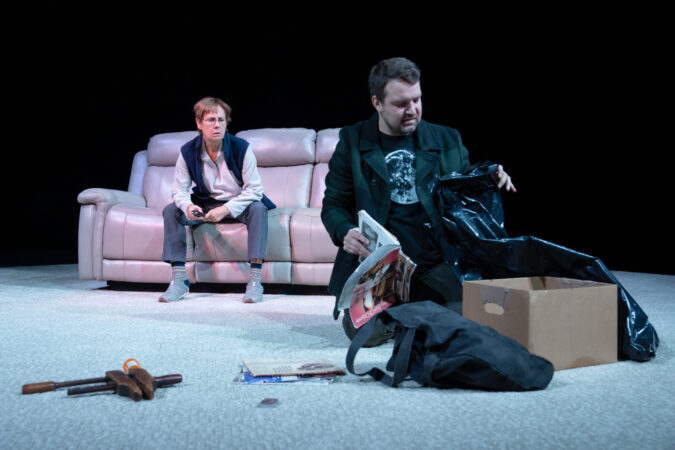
Laurie Metcalf and Micah Stock in Little Bear Ridge Road

Masquerade

Company of Masquerade

Company of Masquerade

Hugh Panaro, Nik Walker, Jeff Kready, Clay Singer, Telly Leung, and Kyle Scatliffe

Telly Leung and Haile Ferrier in Masquerade

Mexodus
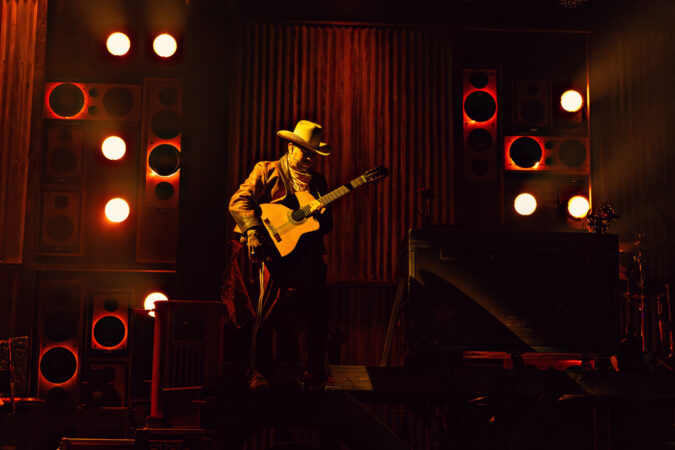
Brian Quijada in Mexodus
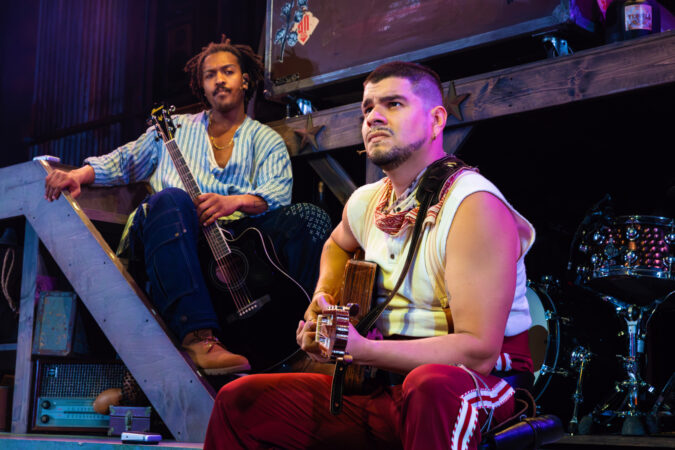
Nygel D. Robinson and Brian Quijada in Mexodus
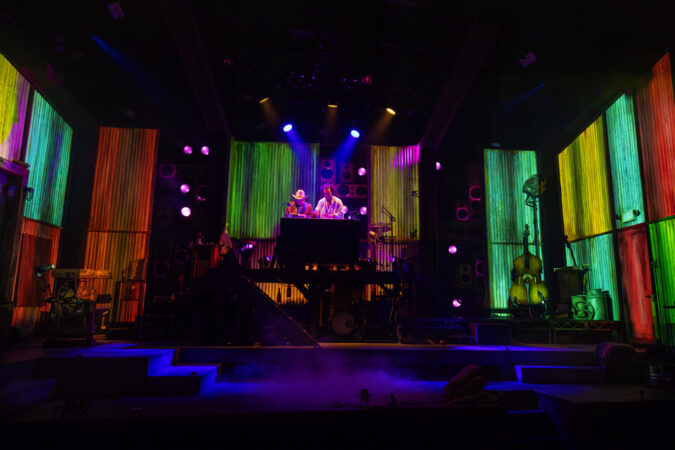
Brian Quijada and Nygel D. Robinson in Mexodus
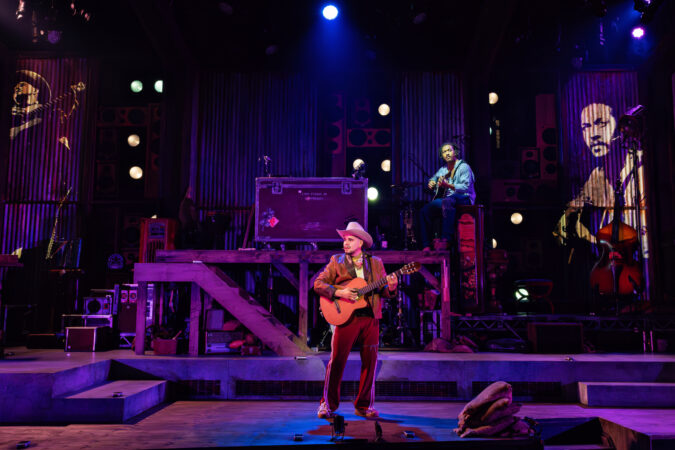
Brian Quijada and Nygel D. Robinson in Mexodus

The Picture of Dorian Gray
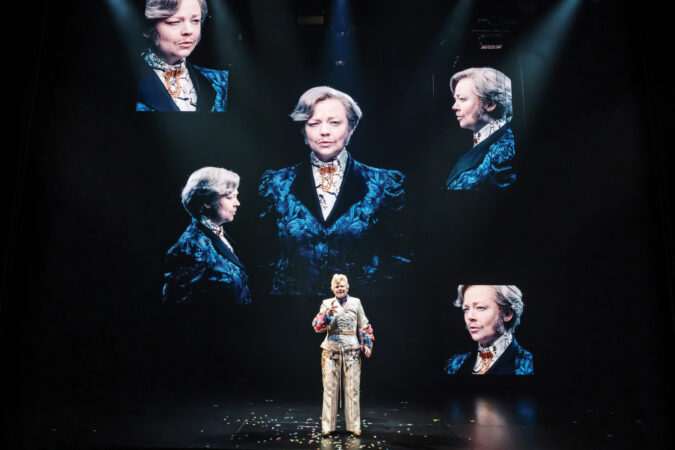
Sarah Snook in The Picture of Dorian Gray

Sarah Snook in The Picture of Dorian Gray
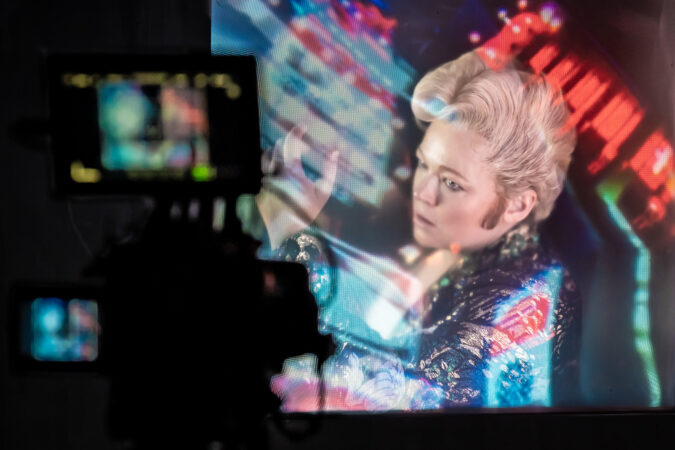
Sarah Snook in The Picture of Dorian Gray

Sarah Snook in The Picture of Dorian Gray

Prince Faggot

Company of Prince Faggot

Rachel Crowl and John McCrea in Prince Faggot

John McCrea and company of Prince Faggot

Mihir Kumar in Prince Faggot

Punch
Matthew-Murphy_2025-10-06-211351_mzze.jpg)
Sam Robards, Victoria Clark, Camilla Canó-Flaviá, and Will Harrison in Punch
Matthew-Murphy_2025-10-06-211358_yozi.jpg)
Will Harrison and Cody Kostro in Punch
Matthew-Murphy_2025-10-06-211354_ryej.jpg)
Company of Punch

Lucy Taylor, Piter Marek, Jacob Orr, Will Harrison, Cody Kostro, Kim Fischer, and Camila Canó-Flaviá in Punch

Sexual Misconduct of the Middle Classes

Ella Beatty and Hugh Jackman in Sexual Misconduct of the Middle Classes

Ella Beatty and Hugh Jackman in Sexual Misconduct of the Middle Classes

Hugh Jackman and Ella Beatty in Sexual Misconduct of the Middle Classes

Hugh Jackman and Ella Beatty in Sexual Misconduct of the Middle Classes

Twelfth Night

Sandra Oh and Lupita Nyong'o in Twelfth Night

Peter Dinklage and company of Twelfth Night

Jesse Tyler Ferguson in Twelfth Night

Company of Twelfth Night


