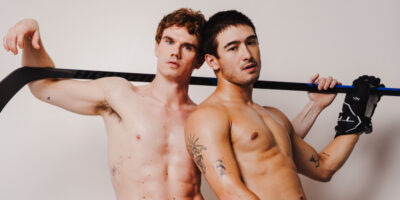
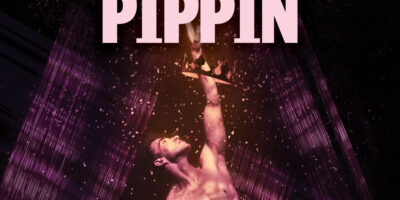
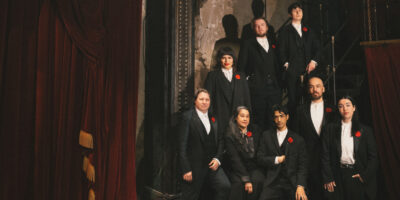
The Phantom's back in town with a brand new lair to explore—and this time, you're brought in on the action, traveling through the Paris Opera Populaire down to the depths below where the Angel of Music lurks. The new immersive Phantom of the Opera production, Masquerade, opened in New York City September 29, and though the story is the same, the experience is entirely different. And there's plenty to surprise both old and new phans alike.
As you may have already guessed, this is not your standard sit-down theatrical experience. At Masquerade, you are guided through the story of Phantom of the Opera scene-by-scene through various rooms and floors of the former Lee's Art Shop, a four-story commercial building now reconstructed to resemble the Opera Populaire. Though there are limited opportunities to rest your feet when you're guided to seats or stools, you will be standing most of the show, so be sure to wear supportive shoes (leave the high heels and stilettos at home). If you have limited ability to stand, or use a wheelchair or mobility device, fear not—there is a designated accessibility path for you, which includes a team member that will escort you throughout the entire experience. Reach out to the box office for more information.
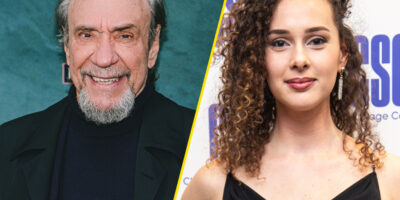
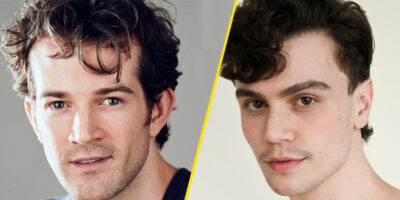
With the immersive nature of Masquerade, it's also highly interactive. From the get-go, you may be selected to dance at the Masquerade ball, or Carlotta and the Managers may speak directly to you. Throughout the experience, some cast members may touch your shoulders to gently alert you as they walk past you, or to bring your attention to action unfolding nearby. You will also have the opportunity to see six different Phantoms and Christines, as well as three different Raouls. With six performance slots each night, your entry time will determine which leading trio you see. Those who enter earlier might have the opportunity to see Clay Singer and Riley Noland as the Phantom and Christine, while those who enters 15 minutes after yours might see Hugh Panaro and Francesca Mehrota. This is a dream for any Phantom "phan" eager to see an array of different interpretations on the main characters, and it brings an exciting element of mystery to your experience going in. Here is the full list of performers you could see.
But that's not the only thing that's different. From new songs to a new backstory for the Phantom, Masquerade is truly distinct from Phantom of the Opera. Below are fives key surprises. (Warning: beware of spoilers ahead, and keep your hands at the level of your eyes!)

1. The plot has been somewhat rearranged
Masquerade begins in a much different fashion than the original Phantom stage show. The story now starts off with the group song "Masquerade," which is usually the Act II opener (so good-bye Lot 666). You're now dropped right in the middle of the story, shortly before Madame Giry transports you back, telling you the tale of the Phantom of the Opera. From here, you're brought through most of Act I in the same order as the original production. Then, you're guided through a bit of the Phantom's backstory that is barely brushed on in the original production (more on that below).
"All I Ask of You" goes straight from the rooftop to "Wishing You Were Somehow Here Again." and then to "Wandering Child"—where the Phantom now presents his Don Juan Triumphant opera to Christine, rather than at the masquerade ball. But "Notes/Primadonna" comes next (much later than in the previous version, and much shorter in length) and rather than "Twisted Every Way" leading into "Wishing," it precedes the chandelier drop, which deserves its own section....

2. The chandelier has been moved
Ruthie has returned! Or is it technically Ruthie III? It wouldn't be Phantom without a chandelier and yes, she does crash here. However, exactly when that occurs has been moved. While in the original stage show, the crashing of the chandelier occurs at the end of Act One, after "All I Ask of You," Masquerade moves the chandelier crash to after "Point of No Return" (which is where it occurs in the 2004 Phantom film).
And because of the smaller space, audience members get a closer look at Ruthie III (the West End Phantom chandelier is named Ruthie, while Broadway's was Ruthie II). We can confirm, this new Ruthie is beautiful, more of a round shape rather than oblong like Broadway's, and close enough that you can admire every one of her crystals.
In addition, because Ruthie III is not hung as high as Ruthie II was, she doesn't have as far to go when she crashes, where she lands seemingly right in front of audience members' feet. It's quite a scene and amazingly chaotic as the iconic Phantom overture plays.

3. The Phantom's backstory is thoroughly explored
Phantom and Christine shippers, you won. The chemistry is off the charts between the Phantom and Christine (technically Phantoms and Christines since there's six of them), as the two share much more intimate moments in Masquerade. For instance, following "Music of the Night," Christine falls asleep in the Phantom's bed and has a dream interlude where the Phantom's hands caress her until he appears ghostlike beside her, and then wraps his arms fully around her.
Similar to the 2004 film, Masquerade explores the Phantom's backstory—his name, Erik, is finally utilized in the production. The show explores his lore and what led him to become the Phantom, giving audiences a glimpse inside his twisted (every way) mind.
There's even a new scene set during his younger years as a caged circus "freak" act, where audiences can even interact with young Erik. He may even offer you a keepsake if you are particularly kind to him. It's a heartbreaking letter from his mother, which reads: "Erik—from now on, the carnival will be your home. You are a child of the devil. Among freaks and monsters you will find your kind. Forget you ever had a mother."
The hatred the Phantom experienced from his mother is something that is barely touched on in the original musical (where it's only explored through lyrics like "This face which earned a mother's fear and loathing / a mask my first unfeeling scrap of clothing") The letter expands on this part of Erik's history; knowing that his own mother believed he was a monster, it's no wonder he becomes one.
The Paris Opera storyline has also been changed somewhat to create a more sympathetic Phantom, including two major changes to his crimes. His first hanging victim (who doesn't even die by lasso this time!), Joseph Buquet, is seen moments before his death ogling Meg Giry and trying to make a move on her, despite her clear dissent. Meanwhile, Piangi's death does not explicitly occur in this production; it's merely hinted at, and even then, it's entirely possible that he is only injured or otherwise predisposed—as the Phantom snatches him away through a closet quipping, "Don't worry, he has an understudy!" So, if the only guy the Phantom killed was a creep...that's another win for the Phantom apologists?
Other fascinating tidbits of information are revealed about Erik, such as how he is an inventor. In the previous Broadway production, Madame Giry only noted him to be a "scholar, architect, and teacher." His Masquerade lair is full of large-scale music-box types of creations, with life-size animatronic figurines (this show replaces the typical "Mirror Bride" doll with one that now walks on its own). Though it's no longer called Phantom of the Opera, Masquerade doesn't let you forget the mad genius at the center of it all.

4. The music has been modified
Despite the New York Times' claim, it's an exaggeration to say there's an hour's worth of new music in Masquerade. There is some new underscoring and a new song though. During the circus scene, there is a new song penned by Andrew Lloyd Webber, "Come and Marvel at the Freak." The credit song from the 2004 film is also included in this iteration, "Learn to Be Lonely," which is sung by Madame Giry to Erik after she rescues him from the circus; she reminds him not to count on her as he is not her responsibility, and though she was happy to help him, he must learn to live his life alone.
Many Phantom songs have been cut for length, but in most cases, you might not even notice, as the core components are still there. "Wishing You Were Somehow Here Again" is shorter but still features its chilling introduction and empowering bridge into the final chorus. The more concise "Notes/Primadonna" still offers plenty of Carlotta chaos and bantering between the managers...just not so much that it takes up a whopping 13 minutes of your evening. In Masquerade, scenes move swiftly, but never too quickly so you still get the full context from each song.

5. The design is slightly different.
Hal Prince's direction, Gillian Lynne's choreography, and Maria Björnson's scenic and costume design have not remained with this production. Yet, their successors (choreographer Sidi Larbi Cherkaoui, scenic designer Scott Pask, costume designer Emilio Sosa, and Tony-winning director Diane Paulus) bring a new element of surprise while respecting the original vision. Though it's not quite the same as Prince and Björnson's original concept of a minimalist set juxtaposed against an elaborate proscenium (and a few other statement pieces such as the chandelier, the grand staircase, and Christine's dressing room), there's still a cavernous feel to the Masquerade space, even when stocked full of opulent furniture and art.
Each shadowy room evokes a candlelit moodiness that certainly echoes the original concept of darkness meeting rich grandeur.
There are beautiful new designs to be found all around, from masks created by Nicola Formichetti (a frequent collaborator with Lady Gaga) to paintings and sculptures from prolific artists—even an iron gate made by Bob Dylan himself. (Yes, that Bob Dylan!). But don't worry, all the motifs that matter can still be found, from the chandelier to the monkey box.
What may excite Phantom nerds are all the easter eggs to be found for those who know the numerous versions of the story. The Phantom's very first mask, gifted to him by Madame Giry, is actually a full-face mask more akin to the one he would have worn in Gaston Leroux's original novel. Of course, the full mask is not a concept that remained in Andrew Lloyd Webber's original production; as a nod to this, in a moment of sheer theatre magic, Erik's mask changes from whole to half in an instant as he knocks his head into a mirror in a moment of fury, shattering the mirror and part of his mask.
You can even take the designs home; there are a handful of beautifully penned notes that lucky audience members might be gifted, featuring elaborate red wax seals in the shape of a skull. Plus, a ticket to the Phantom's Don Juan opera is given to each patron upon entry, and the cast list on the back, written in French, lists each characters' role, from Christine's billing as Aminta to Piangi's as Don Juan.

There is one more prominent change to the musical's tragic ending, following the Phantom's redemption with Christine's kiss that we won't totally give it away—just know that it cuts even deeper, and you might want to bring a pack of tissues for your tears. Though these changes may feel surprising at first, it's exciting to know that the Music of the Night is being sung in New York City once more—refreshed and revitalized in a way that excites fans familiar with the story, and draws in newcomers.
Whether you've seen Phantom of the Opera a handful of times on Broadway or you've hardly even listened to the cast recording, Masquerade is a thrill ride of spectacle, song, and story for anyone who can open up their mind (...and let their fantasies unwind) for it.


Hugh Panaro, Nik Walker, Jeff Kready, Clay Singer, Telly Leung, and Kyle Scatliffe

Kaley Ann Voorhees and Nik Walker in Masquerade

Riley Noland and Clay Singer in Masquerade

Telly Leung and Haile Ferrier in Masquerade
Jeff Kready and Anna Zavelson in Masquerade

Kyle Scatliffe and Eryn LeCroy in Masquerade

Hugh Panaro and Francesca Mehrotra in Masquerade

The Masquerade chandelier.

\Masquerade

Masquerade

Masquerade