


A few weeks ago, when composer Heather Christian got the call from the MacArthur Foundation saying they were awarding her $800,000, she thought it was spam. After all, it came from an unknown number. "I looked down on my phone and I had eight missed calls from the same number," she recalls, adding that they called while she was in rehearsal for her show Oratorio for Living Things. Later that afternoon, when that number popped up again, "I was prepared to answer the phone like, 'Hi, you have to take my name off this list. You cannot call me during the day. I am running rehearsal all day. This is very distracting.' They sort of immediately jump on it, right? They were like, 'Hi, Heather. This is the MacArthur Foundation.'"
She had been named a 2025 MacArthur Fellow, which is one of the highest honors an artist can receive: it is informally called the "Genius Grant" and it comes with a no-strings-attached award of $800,000. Among the artists who have received it are Lin-Manuel Miranda, Branden Jacobs-Jenkins, Dominique Morisseau, Taylor Mac, Larissa FastHorse, and many others.
Christian admits, after the news went public last week, that she is still processing what it all means. As an artist who primarily works Off-Broadway and in experimental theatre, "I don't know what more than $600 means," she exclaims. "I'm able to think about what I want to do beyond.... Like, finally rest easy, that I might be able to get old and have that be okay."
Christian is well-respected among downtown New York artists. Her aforementioned Oratorio for Living Things (which won two Obie Awards in 2022) is being remounted at Off-Broadway's Signature Theatre—it's a sung-through piece where a choir sings about life, the universe, and time. The Signature is also presenting Christian's autobiographical musical Animal Wisdom in spring 2026; Christian is working on a commission for the theatre.

Meanwhile, Christian had just completed the world premiere run of A Wrinkle in Time in Washington, D.C., the adaptation of Madeleine L'Engle's novel for which she wrote the music. She says it's eyeing Broadway in 2027. But for an artist who has primarily worked downtown who has always been more fascinated with writing music that doesn't follow traditional musical theatre forms, a MacArthur is arguably more validating than something like a Tony Award.
"This is the one that really means something to me," says Christian. "A Tony is lovely, but a Tony feels like it is an achievement for what commercial theatre is doing. It's an achievement in the commercial, global market space, and the MacArthur is an achievement in the thinking space. This is the one that, like morally and spiritually to me, has always felt like they really have their finger on the pulse of people that are dedicating their lives to curiosity and niche exploration."
As for what she plans to do with the money, Christian has some time to figure it out; the $800,000 will be distributed in quarterly installments over five years. But she did call Taylor Mac, who received a Genius Grant in 2017; the writer-performer told Christian to not touch the money for four years.
"The advice that I've gotten from other theatre artists that have gotten this award was, 'Don't spend it on your art unless you absolutely have to. Spend it on your time,'" says Christian. "Spend it on freeing yourself up so that you can make the art."
And that process of freeing includes, perhaps, not having to take so many jobs composing for film and television to get by (Christian is a composer on the BBC series A Good Girl's Guide to Murder). It also includes, Christian admits, trusting her own artistic instincts—especially now she's finally dipping her toe into the Broadway space, which hasn't been an entirely smooth process, as she'd been struggling with fitting her unique musical voice into a more mainstream vehicle.
"The grant gives me more fuel and wherewithal to fight harder against the oftentimes abusive nature of the Broadway development machine, so this just means I'm gonna be a squeakier wheel," says Christian. "The fact is, I have a very deep relationship with [Wrinkle in Time] and my inner 11-year-old who read it five times in a row, and I now feel like I have more license to fight to not just make it a great show that aligns with my larger creative identity, but also make it an artistically and holistically good experience for everyone who works on it, which previously felt impossible."
For many artists working right now, if they aren't regularly working on a Broadway show, it's a paycheck-to-paycheck existence—trying to juggle jobs that pay money with finding time to make their art (usually for little to no money). So for artists like Christian who get a MacArthur Genius Grant, it is an opportunity to not worry about money and to truly, in the style of old-school patronage, focus on the art they want to make.
As Christian notes, wryly, "That is a dream. I don't know that I've fully accepted that that's where I'm at right now. But I think when the news finally descends to my bloodstream, that will feel really freaking liberating."
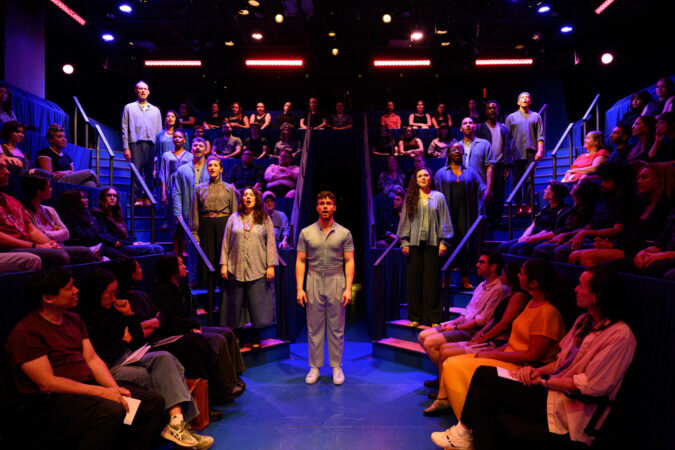
Company of Oratorio For Living Things

Ashley Pérez Flanagan and Ben Moss in Oratorio For Living Things

Divya Maus, Fraser Campbell, and Ashley Perez Flanagan in Oratorio For Living Things
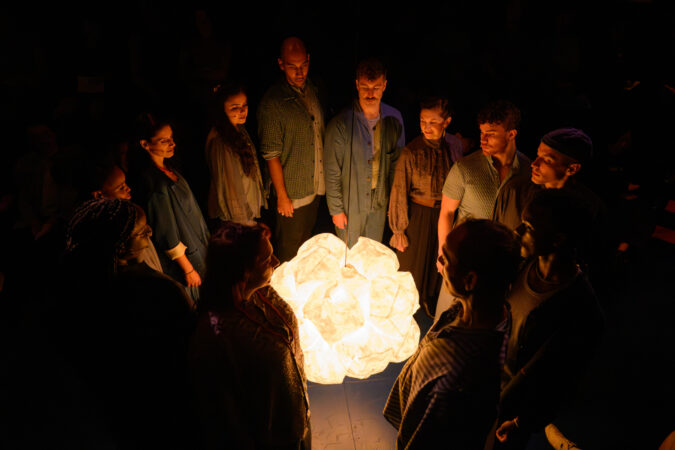
Company of Oratorio For Living Things
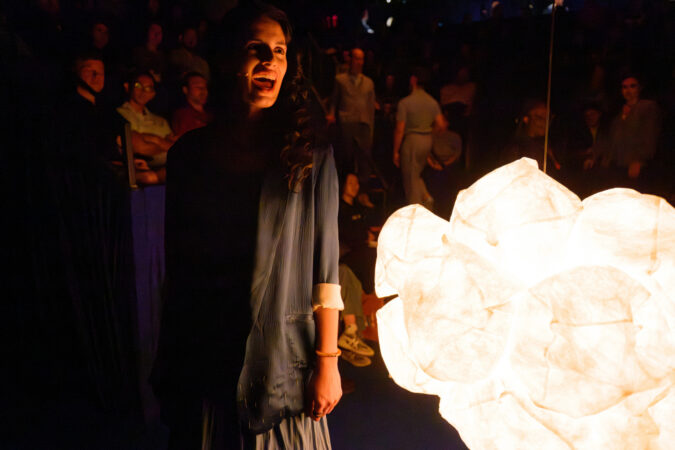
Divya Maus in Oratorio For Living Things
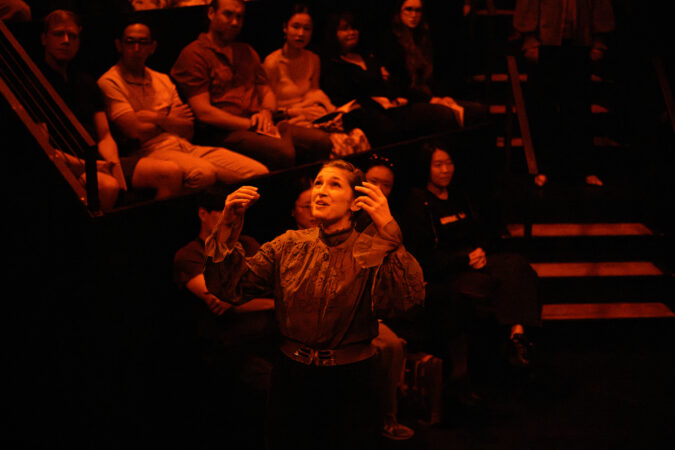
Kirstyn Cae Ballard in Oratorio For Living Things
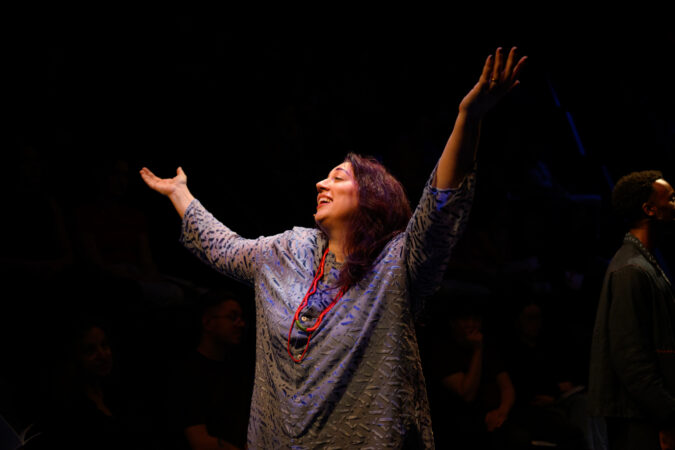
Barrie Lobo McLain in Oratorio For Living Things
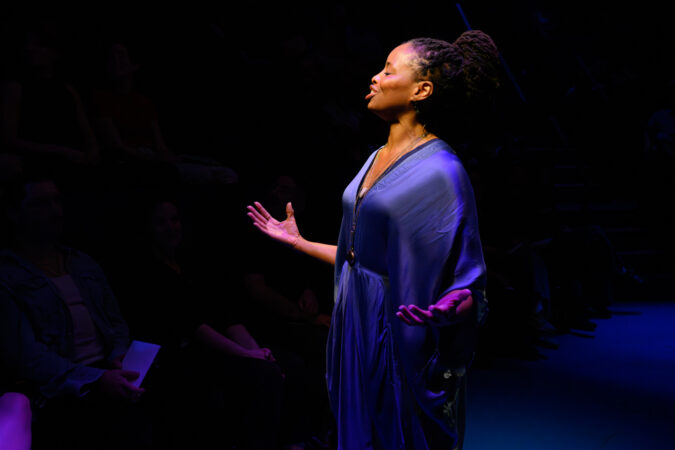
Carla Duren in Oratorio For Living Things

Dito van Reigersberg, Jonathan Christopher, Jonny James Kajoba, and Ben Moss in Oratorio For Living Things
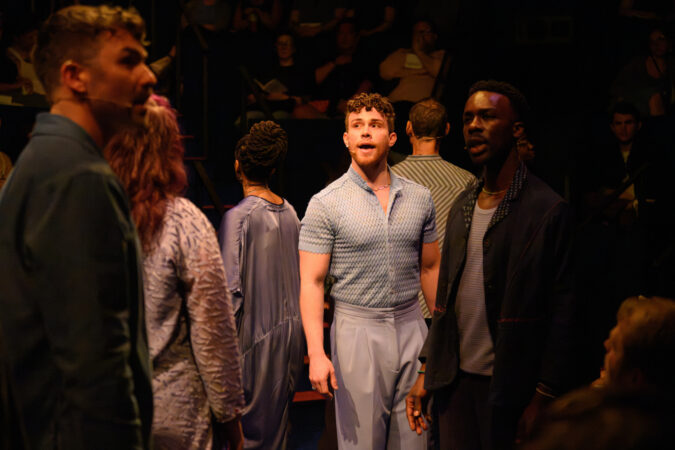
Ángel Lozada in Oratorio For Living Things


Jeremy-Daniel.jpg)


