On July 27, alumni and fans of the landmark musical A Chorus Line gathered in the show’s first Broadway home, the Shubert Theatre, to celebrate the musical, marking almost 50 years to the day that it began its historic run in 1975. The evening was a fundraiser for the Entertainment Community Fund—specifically their dancer-aimed The Dancers’ Resource and Career Transition For Dancers programs. And it was incredibly successful, bringing in more than $1 million! Playbill was in the audience, and we’re here to tell you what it was like.
A Chorus Line, for the uninitiated, transports audiences to a dance audition being held in a Broadway theatre for the ensemble of a musical. A line of hopeful dancers assembles to try their best at getting this job, but director-choreographer Zach has more in mind than testing their dance abilities. Mostly speaking unseen from the audience, Zach probes the dancers on their childhoods, wanting to know more about the dancers themselves. Songs from Marvin Hamlisch and Edward Kleban’s Tony-winning score include standards like “One” and “What I Did for Love.” If you’re a theatre fan, you may well be able to add the entire remainder of the score to the list of favorites this show introduced, too (personal points to “The Music and the Mirror” and “At the Ballet”).
The show is one of those rare huge successes that hits both artistically and commercially. For obvious reasons, theatre people tend to love A Chorus Line. The show is about us, even if you’re not specifically a dancer. But the brilliance of the show—specifically director-choreographer Michael Bennett’s concept, executed with book writers Nicholas Dante and James Kirkwood Jr.—is that it uncovers stories that are wildly universal. That shows itself very straightforwardly when it’s covering the performers’ adolescence and puberty in the "Hello Twelve, Hello Thirteen, Hello Love" montage, for instance.
But on a deeper level, the show is about people who really want something, need something, and have to make themselves vulnerable to get it. That’s always true in auditions—one is never more vulnerable than doing your thing and hoping a decision maker likes you best. But it gets amplified when Zach starts digging into the dancers’ backgrounds, which ends up involving everything from funny anecdotes to painful memories of real trauma. And as a result, it’s pretty hard to not empathize with what you’re seeing on stage in this show, whether you’re a professional performer or an office worker.
A Chorus Line was kind of Hamilton before Hamilton—eerily so. Just like the Lin-Manuel Miranda musical, A Chorus Line was developed by and premiered at Off-Broadway’s Public Theater, where it became a much buzzed–about hit and promptly moved to Broadway for a summer opening. It became the show to see, and something of a cultural touchstone, one whose influence extends far beyond just theatre fans. And also like Hamilton, A Chorus Line was an award winner, too. The show won nine 1976 Tonys, including Best Musical; and the Pulitzer Prize for Drama, only the fifth-ever musical in history to earn that honor (Hamilton is also a Pulitzer winner).
A Chorus Line hit with audiences not just because it was good, not just because Bennett's choreography was instantly iconic, not just because its songs are world class. It hit because it is the kind of show that strikes a nerve with almost anyone who watches it, turning the show into a massive, long-running, and very profitable hit (helpfully with almost no set and pretty minimal costume design, to boot). It became the longest-running show in Broadway history less than a decade after it opened, in 1983, and held that distinction until it was surpassed by Cats in 1997—and it took seven years of A Chorus Line being closed for that to happen! The original production played its final performance in 1990, but it’s remained an oft-produced favorite on all sorts of stages worldwide in the years since, including a 2006 Broadway revival and a major NYC staging at New York City Center in 2018.
And so, the July 27 reunion concert wasn’t just another Broadway reunion concert. We love a reunion concert, but this one carried some extra gravitas. First and foremost, A Chorus Line is a hugely influential show in the lives of so many. It’s an inspiring touchstone for almost anyone who has ever dreamed of becoming a professional performer, even moreso if you’re a dancer. And thanks to all of those regional productions, revivals, and tours, it’s also on the resume of (quite literally) thousands of performers, to say nothing of how many theatre dance classes that teach the instantly memorable opening combo.
The anniversary concert was also something special because the original cast of A Chorus Line is something extremely special. The show was not just historic for its success and quality. It was also novel and incredibly influential for how it was made—creating dancing legends out of its original cast. The musical came about rather unusually, with Bennett gathering Broadway dancers in a rehearsal studio for a post-show dance class and midnight rap session that saw participants sharing their own actual life stories while Bennett’s tape recorder rolled. Many of those exact stories became the dialogue and lyrics of the finished show, and many of the dancers who shared those real stories went on to become the show’s original cast. Bennett and his creative team developed the work with a series of developmental workshops, a practice that has become fairly standard in musical theatre today but was wholly unprecedented for that time. Three of that original cast—Donna McKechnie, Kelly Bishop (then Carole Bishop), and Sammy Williams—won Tony Awards for their performances. All three of them had been at those original taped sessions.
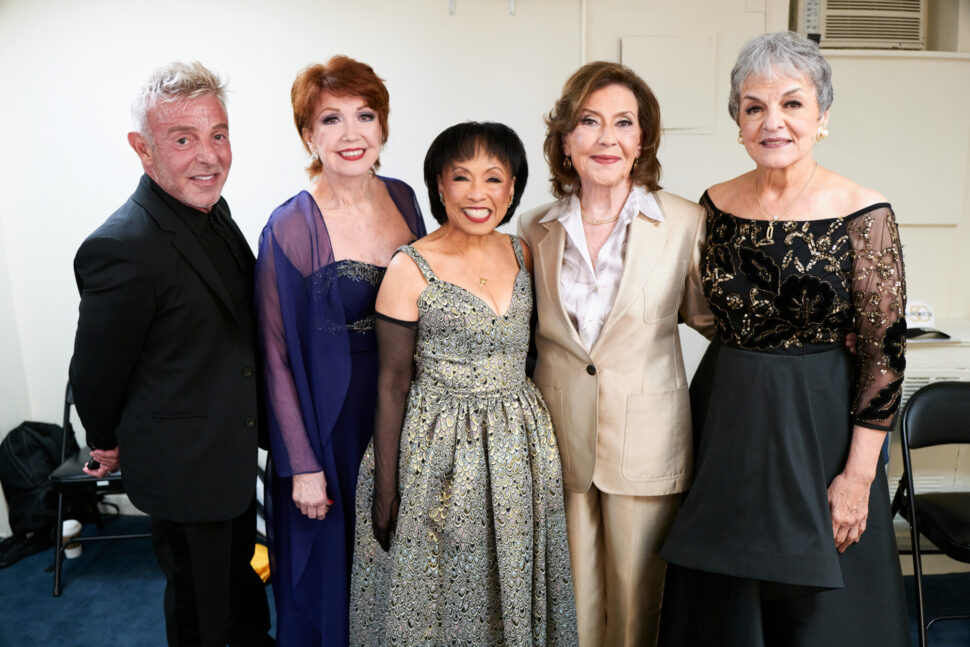
Don’t get me wrong—I’ve seen A Chorus Line be a fabulous musical with many, many different casts. But I have to say when you hear it performed by those O.Gs, when you hear those lines coming out of the mouths that they were written on and for, it just hits wildly different (I am definitely not linking you to an archive taping of the original cast during the Off-Broadway run that leaked and is viewable online). The same goes for the choreography. “The Music and the Mirror” is amongst the greatest dance sequences ever created for the theatre. When you see McKechnie do it, it is positively goosebump-inducing.
READ: Five Cassies Celebrate Five Decades of A Chorus Line
And so, having the original cast—the surviving original cast, rather—back again on the very stage where they made A Chorus Line a giant Broadway hit… it’s almost overwhelming. Fifty years have passed since the musical premiered, and the HIV/AIDS crisis ravaged the theatre industry during that time also, which means sadly we are without many of the people who created this beloved musical. That list includes the entire primary creative team—Bennett, Hamlisch, Kleban, Dante, Kirkwood Jr., and co-choreographer Bob Avian—and much of the cast, too. But we did get to see original stars Donna McKechnie, Kelly Bishop, Baayork Lee, Priscilla Lopez, Wayne Cilento, Scott Allan, Donna Drake, Brandt Edwards, Patricia Garland, and Michael Serrecchia re-join the line at the Shubert July 27, surely the first time that much of the original crew has been re-assembled in decades. And they were joined by legions of other prominent A Chorus Line alum—Bebe Neuwirth, Tommy Bracco, Charlotte d’Amboise, Robyn Hurder, Jay Armstrong Johnson, James T. Lane, J. Elaine Marcos, Bebe Neuwirth, and Leigh Zimmerman, to name but a few.
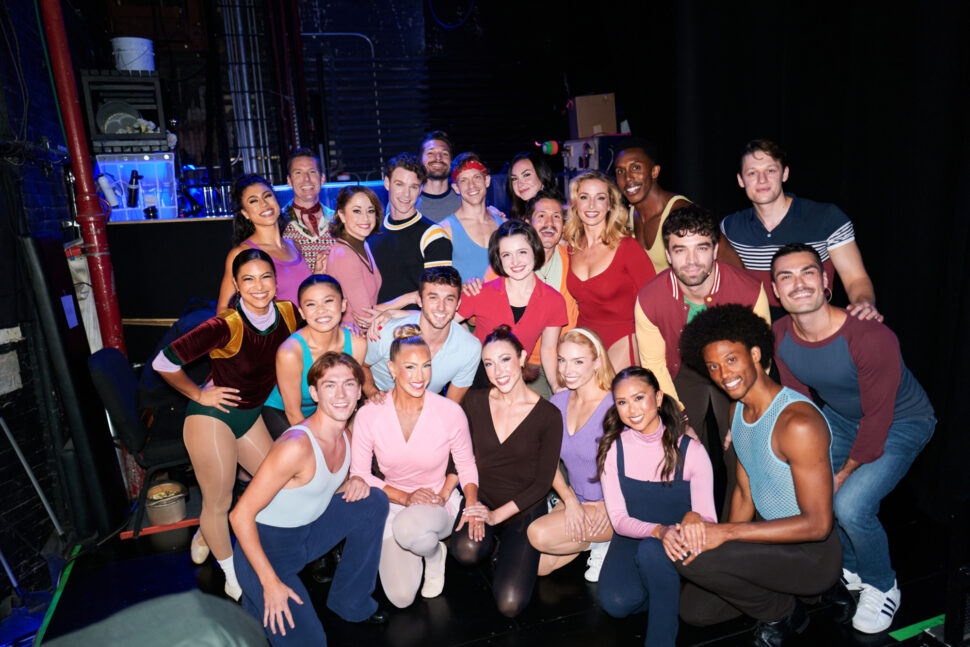
In maybe the most Chorus Line way to do A Chorus Line, there was also a 50th anniversary cast of real Broadway dancers, allowing this reunion concert to continue to pay tribute to the exact group of people this musical has always been paying tribute to. Even if the show has made stars of its original cast, A Chorus Line is still about chorus dancers, after all.
And if you may indulge me in some particularly niche theatre nerd-dom (and you will, because let’s be real, that’s what you came here for), we had something else to welcome back to the Shubert: the original orchestrations. Likely because Hamlisch had started his career as an arranger in the theatre and knew firsthand how hairy it can be getting things ready for opening night, he orchestrated his shows different than most once he started creating his own scores. Instead of having one orchestrator like most shows, Hamlisch would hire a team of orchestrators and split up the songs between them, so that they could be more agile at making changes during the rehearsal and preview process. But for some reason when the show was revived in 2006, Hamlisch decided he wanted the orchestration to be more of one pen, and had original co-orchestrator Jonathan Tunick do his own charts for the entire score, replacing the work of former collaborators Hershy Kay and Bill Byers.
And look, no one is arguing that Tunick isn’t a world-class orchestrator. His Tony-winning work (many of them with Stephen Sondheim) stands in a class of its own. And the 2006 Chorus Line orchestration certainly isn’t bad. It just made changes. And if you are like this writer and have the Broadway album printed on your ears and heart, that can be a little jarring. Most notably, the revised orchestration attempted to take some amount of the original’s ‘70s-era sound out, such as the funky guitar in "I Hope I Get It," which was eliminated fully—along with the entire guitar part throughout the show. Normally that wouldn’t be a big deal—the 2006 revival is long gone—but that revised orchestration has replaced the original for companies putting up new stagings (a humble and public plea to Terre Hamlisch and Concord Theatricals to let people opt for the originals again).
I really can’t tell you how exciting it was to open up the Playbill before the show and see a guitarist in the pit listing. And when guitarist Justin Rothberg’s “I Hope I Get It” solo rang through the Shubert during that thrilling opening sequence (the orchestra expertly led by conductor Joey Chancey), I realized I wasn't being a too-passionate theatre queen clutching his pearls, those original orchestrations do make a big impact. Those original arrangements—I’m looking at you, “The Music and the Mirror” dance break—are just really good, and they should be heard.
Okay, congratulations, you got through my very specific, impassioned screed.
The energy at the Shubert on July 27 was palpable. Tickets for the evening sold out within hours, which meant there were lots of people excitedly waiting to get into their seats, and more hoping for last-minute extra tickets. I arrived about 20 minutes before the show was supposed to start, and found a line to get in that stretched through Shubert Alley to 45th Street, even snaking south on 8th Avenue for a piece. Wild. Luckily, long lines like that can be fun when everyone there shares your love of the thing you’re about to see. I spent my time waiting to get to my seat chatting with a stranger about how many times he’d seen the original run, and how Kelly Bishop really was Carole when she first starred in A Chorus Line.
Also up for discussion was how it was unclear what we were going to see. Reunion concerts often are just the show itself. But for a show as dance-heavy like A Chorus Line, equal emphasis needed to be placed on not just the singing, but the dancing. Baayork Lee—the show’s original "four-foot-ten" Connie Wong who was later designated by Bennett to become the work’s primary steward, re-staging it around the world and maintaining Bennett’s original work—gave us an evening that was as much a celebration of the show and what it meant as it was the show itself. We got everything from original cast members taking the stage to perform excerpts from their parts, some for the first time in decades; to dynamically staged numbers that re-imagined Bennett’s original choreography to newly incorporate multiple performers. The excellently conceived and executed performance was, if anything, especially appropriate for A Chorus Line, harkening back to the show’s record-breaking performance during the original run in 1983. Unlike the 50th anniversary event, they did the whole show that night in 1983, but Bennett restaged much of the show to incorporate a who’s-who of international alum of the show. It was a particular thrill to see Lee’s version of that come back to the Shubert.
The evening got off to a strong start, with Bennett’s own voice ringing through the Shubert, from the actual tape recordings that began the A Chorus Line development process. And then we got an “I Hope I Get It” (dangerously close to its original, much faster tempo!) that was really one of the better times I’ve seen that iconic choreography in recent memory.
Let’s talk about the dancing from the reunion concert in general. Again, I have seen A Chorus Line be a fantastic and thrilling musical a lot over my lifetime of going to the theatre. Bennett’s choreography is iconic and much-revived for a reason. It’s so storytelling-driven, and it’s also just real good and engaging to watch—is there anything better than that final stretch of “The Music and the Mirror?” No!
But there’s something that can happen to shows when their choreography and staging get as revered as A Chorus Line, which is they can become, in my opinion, almost too crisp, too good, erasing the dangerous edge that made it memorable to begin with. That is something I’ve noticed with A Chorus Line a lot over the years (albeit I’ve sadly seen almost none that Lee was involved with). The aforementioned “I Hope I Get It” tempo? Most productions slow that number down a shocking amount primarily so that the dancers can execute the choreography better. But I don’t think that’s ever what Bennett was going for. He was staging an audition, and we’re to believe we’re watching the dancers doing those steps mere minutes after learning them. It shouldn’t be clean. It should be exciting.
Whether it’s because this one-night-only affair was put together quickly, the elevated energy from the importance of the night, or perhaps just Lee being at the absolute top of her game, it felt the closest to watching the original cast do it in 1975 that I’ve ever personally seen. It’s funny saying that you enjoyed something that was messy. But that's not what I mean; it never looked messy and never looked bad. But the frantic energy of it was thrilling, and palpable. And that continued throughout the evening. Bravos all around!
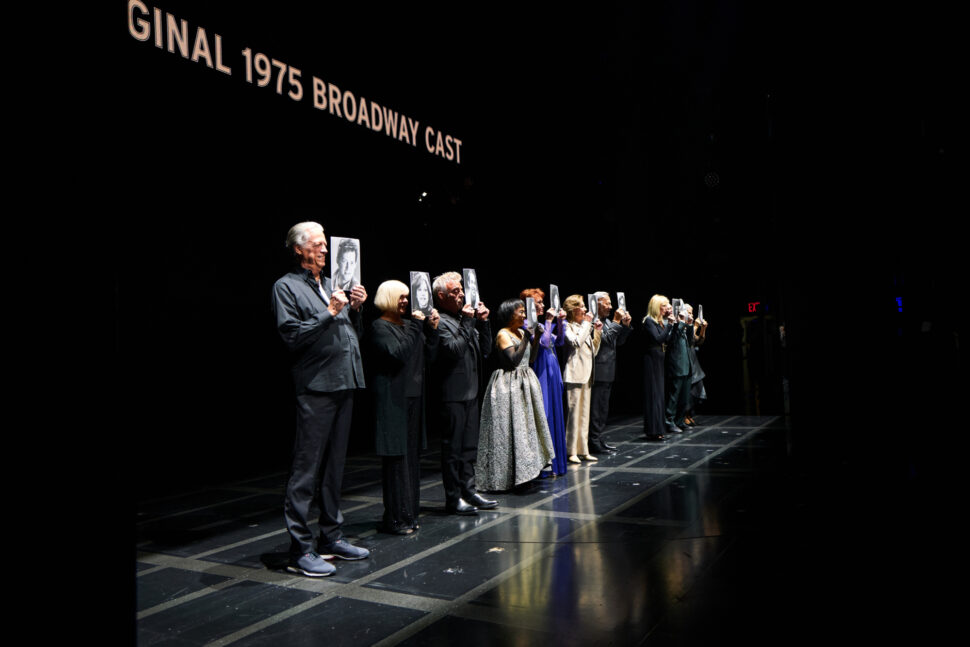
But as good as the dancing was, there was nothing more amazing than when the lights went out just as the called-back dancers should be stomping up to the line, headshots in front of their faces—one of the show’s most enduring, iconic images. You could feel immediately that the audience knew what was up. It was time for a switcheroo, and an important one. When the lights came back up, there was the entire original cast of Chorus Line, in their original spots (holes for the dearly departed and all)—with their 1975 headshots in front of their faces. Needless to say, there was an immediate standing ovation that lasted for quite some time. Magic.
And then started the speeches. First up was Bebe Neuwirth, a Tony-winning dancer who made her Broadway debut as a replacement Sheila during the original run. She’s also the founder of The Dancers’ Resource, a program that provides dancers with emotional support and other resources after significant injuries. Proceeds from the evening—which exceeded $1 million!—are going to the program, along with ECF’s Career Transition For Dancers.
“To ask any one of us who performed in the show what it was like, or what it meant to us as dancers, we’d be hard pressed to adequately express the profundity of our emotions, the existential validation that A Chorus Line gave us,” Neuwirth said. “For the first time, dancers were given a voice, were seen and heard. In A Chorus Line, the dancing ensemble became the main characters, the stars of our own show, a show which tried to answer a question essential to artists: Why do we do it?”
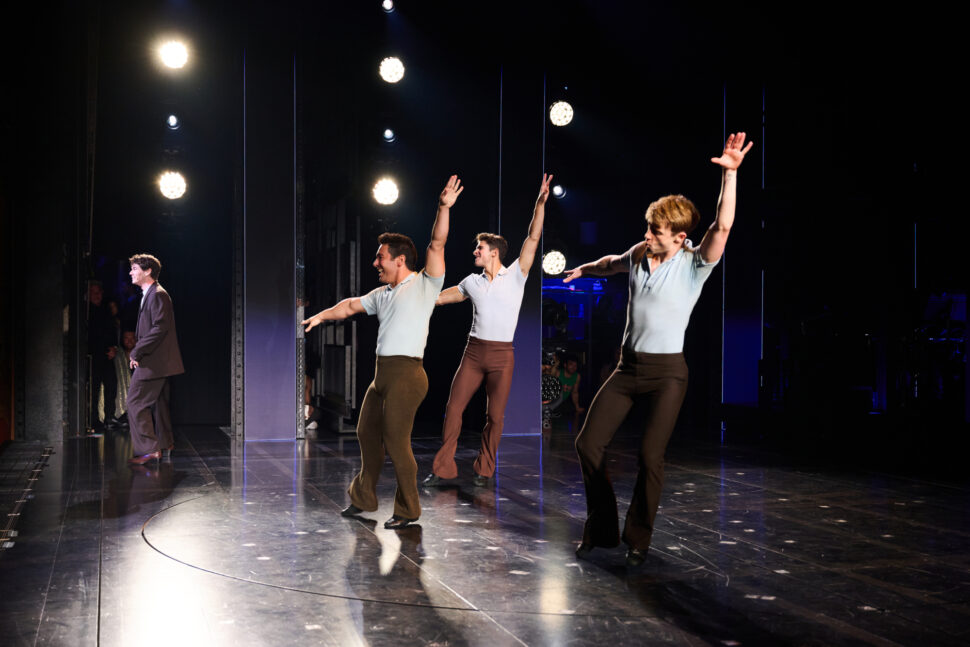
Then to introduce “I Can Do That,” we got the song’s originator, now Tony–winning choreographer Wayne Cilento, who began by telling the story of the original tape sessions. He revealed that his character Mike’s story, about a young boy who starts going to dance class after accompanying his sister to her’s, was actually the story of Sammy Williams, the original production’s Paul. “But the boy from the Bronx who did the number was me,” he said mischievously. Cilento then brought on Nick Alvino, Trommy Bracco, and Tony D’Alelio to perform a three-person version of the choreography—complete with three different versions of the finale trick showcase in an extended finale!—as Broadway favorite and Chorus Line alum Jay Armstrong Johnson handled the vocals. “I’m excited to see what they got, but I know I’m going to give them notes,” said Cilento cheekily.
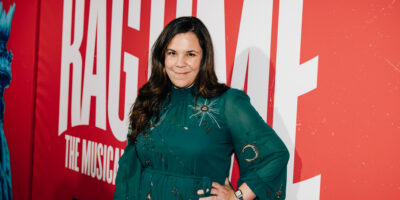
The next original cast speech came from Bishop, introduced by her Gilmore Girls “daughter” Lauren Graham. Bishop described the New York of 1975 as a low point, with the city on the brink of bankruptcy and the theatre district downright scary. “And then A Chorus Line came, and we brought back hope to the city,” she remembered. “And we played to sold-out houses while the limousines lined up out front. And soon, we became known as the show that saved Broadway.”
And then Bishop seamlessly segued into the Sheila monologue that precedes “At the Ballet” to literal audience gasps (yes, I clutched my pearls at the deletion of the song “And,” but I’ll let it go). If you haven’t seen Bishop perform the monologue, I can’t recommend enough that you fix that (again, I am not telling you where you can see it). Watching her return to that Tony-winning moment honestly gave me full-body chills. Sheila is one of those characters that is sassy and funny no matter what. But Bishop’s take on it has so much going on underneath the surface, so much that is informing where her bravado and “ego” come from. It’s just…it’s a very Tony-winning performance, if that is even a thing.
As for the song itself, one of the show’s best, we got Krysta Rodriguez, Jessica Vosk, and Leigh Zimmerman to handle the vocals. Vosk in particular stunned filling in for original cast member Kay Cole as Maggie, stratospheric high notes and all. When Vosk came out, her mic was not working, which sent me into an immediate panic—we can’t have “At the Ballet” without that belty bridge! Luckily, a handheld emergency mic from offstage saved the day.
It’s too bad Cole wasn’t there, because she’s another one I would have enjoyed clapping for. High belting now is de rigueur. In 1975, Cole was something of an anomaly for being able to do that at all. A Chorus Line was notable in general for creating the “triple-threat” performer; suddenly this ensemble of dancers had to all able act and sing, too. And Cole arguably did that most notably of all, out-singing some of the best of what Broadway had to offer—from people who considered themselves primarily singers, no less!
Next up, to bring Lee to the stage, was someone who is not a Chorus Line alum: 2025 Tony winner Francis Jue. “It can’t be overstated how formative it was for me to see a brilliant Asian American artist being celebrated on Broadway in one of the most impactful shows of any generation,” he said. Jue recounted meeting Lee after she saw him in a college production of Guys and Dolls that featured Jue as Rusty Charlie with a featured dance moment—“It was college,” he quipped apologetically. “I remember Baayork coming up to me and saying, ‘You got it, Kid. You go out there and you represent us.’” It was a wonderful way to mark the full breadth of this musical’s influence, which is massive and many tendrilled.
And then out came Lee, who recounted when Bennett originally asked that she become the show’s steward, to travel around the world for the last 50 years re-mounting his original staging. “A dancer’s story is resonated in any language,” Lee said, then introducing the “Montage” sequence (which encompasses multiple songs and individual sections, but begins and ends with “Hello Twelve, Hello Thirteen, Hello Love”). Lee says the three-part sequence came about after an initial run-through of an early version of the show dragged on for four hours. “Nobody wanted to cut their monologue,” she shared, laughing. And then, in a tribute to Lee’s worldwide journey with the show, we got a “Montage” that spotlighted some foreign language performances, including Roberto Facchin from Antonio Banderas’ Spanish production.
READ: A Chorus Line Book Writer James Kirkwood Reflects on the Show's Early Days
And then out walked Priscilla Lopez, and we all realized we were about to get the original Diana singing “Nothing,” another major highlight from the score. This is another performance that is just kind of owned by its originator—there is no one you want to see handle this fabulous song more than Lopez, who delivered it this evening with every bit as much charm, wit, and pathos as in 1975. What an icon.
We paused the “Montage” after “Nothing” (which is technically part of that “Montage”) to bring on Mandy Gonzalez, most recently the special guest star of Broadway’s Sunset Blvd. Before that, she was Lopez’s co-star in In the Heights. Lopez remembered meeting Gonzalez for the first time at rehearsals for In the Heights’ pre-Broadway Off-Broadway run. “She came jumping over the seats,” Lopez remembered. “She looked like one of those big dogs with the long legs. And then she finally got to me, and said, ‘I knew when I saw the ‘z’ at the end of your name, that I could make it.’” Cue the water works!
When the anniversary cast returned to close out the “Montage,” James T. Lane and Anthony Wayne paused us again to pay tribute to original cast member Ronald Dennis, who created the role of “Gimme the ball”-singing Richie, who they called “the late, great Black man, the triple threat, who paved the way for us to share our talent with the world.” And then Lane, Wayne, and dancer Brandon Burks sang and danced the ever-loving snot out of Richie’s “Montage” solo.
As for “Dance: Ten; Looks: Three” (which you might know better under its more not-safe-for-work title, “Tits and Ass”), it was very sad to not have Pamela Blair there to re-create her hilarious performance (Blair died in 2023). But who we did have is the divine Jennifer Simard. The casting was of course apt, because Simard is currently starring as another character obsessed with, shall we say, unnatural bodily enhancements in Broadway’s Death Becomes Her. And more than that, Simard is just really funny. Her take on the infamous Chorus Line comedy song, glib chest-beating and operatic soprano and all, might just be the funniest performance I’ve seen from Simard in a while—and when you know the kind of performances Simard turns in on the daily, you know how much that's saying.
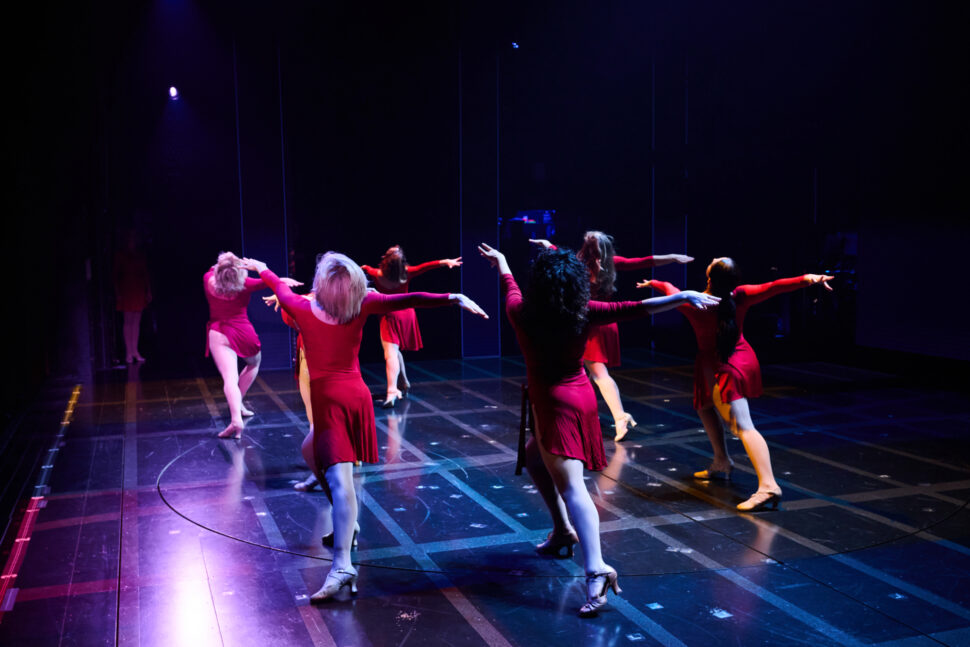
And then we got to, arguably, the evening’s main event: “The Music and the Mirror.” The song, when McKechnie’s Cassie takes center stage at last, is one of the musical’s emotional high points (along with Paul’s devastating monologue, which actually was not performed or discussed at all—another odd cut that I’ll begrudgingly give all involved a pass on). With no introduction (because she does not need one), McKechnie took the stage as Chancey started the orchestra with that iconic underscore. The Tony winner re-created the fabulous scene that leads into the song, another true highlight of the evening. Again, also like the Paul monologue, this portion of the show is among its most vulnerable moments. McKechnie reminded us why she owns this role that she created. Her take on the scene and the song is heartbreaking, inspiring, sexy, confident—and somehow all at once. It earned her a well-deserved Tony Award.
And though she was ultimately joined by Robyn Hurder, Charlotte D’Amboise, and Jessica Lee Goldyn to finish out the song and perform that landmark dance choreography, McKechnie sang much of the beginning of the song in wildly great voice—both her soprano and her belt are in wonderful shape. She sang the song in the same key she performed it in 50 years ago, no less.
After the number, McKechnie returned for her remarks. “When Michael Bennett shaped the role of Cassie around me, he gave me the most fantastic gift in enabling me to find a true artistic voice,” she shared. “While the character of Cassie was a little more fictionalized than most, it gave me the privilege of a lifetime to closely collaborate with the entire creative team. I remember Ed Kleban’s keen interest in our personal experiences, our thoughts, our feelings. And these lyrics became, in part, what made Chorus Line so universal … So many people over the years have felt seen by Cassie’s conviction, her desire for a second chance, her desperate need to get a job that matched her passion.”
After we were denied “And” and the Paul monologue, I was a bit worried we’d miss out on another favorite Chorus Line moment, the first version of “One,” when Larry teaches the combo to the auditioners. But I shouldn’t have been! In yet another memorable moment from a memorable musical, this is the sequence that both dramatizes the inner monologue of a dancer trying to remember and properly execute choreography, and also has a simultaneous and climactic fight scene between Cassie and director Zach (who, it turns out, have a romantic past). We didn’t get O.G.s for this performance, but the anniversary cast were fantastic nonetheless, with Tony Yazbeck as Zach, surrounded by three Cassies.
Next up was the show’s next major emotional moment, the penultimate song that became an anthem: “What I Did For Love.” And to sing the soaring ballad, Lee made a starry and poignant choice of Ariana DeBose. The Broadway favorite began her career as an ensemble dancer, springboarding from her break-out performance as the bullet in Hamilton into a principal career that has seen her become a leading lady and Academy Award winner, for her performance as Anita in the Steven Spielberg-directed film remake of West Side Story. "What I Did For Love" (which featured stunningly excellent vocals from DeBose) was yet another deft example of Lee crafting the evening to celebrate A Chorus Line while continuing to do what Bennett set out to do in creating the show, to shine a spotlight and honor the all too often unsung work, dedication, and artistry of the Broadway ensemblist.
We then got a heartfelt tribute to those from the Chorus Line family that have passed, accompanied by an interesting little easter egg: the unused Chorus Line overture. Unfortunately, this theatre nerd does have to do a slight fact check on Neuwirth’s introduction of the piece. She shared that Hamlisch had written an overture for the musical that ended up going unused when the creators decided to be more verité with things and open cold on the audition already in progress—that’s correct. But then, she described the overture we were shortly to hear as “never before heard,” when I think we all know that it has actually been recorded at least twice, on an obscure 1984 Boston Pops album and an obscure 1993 Rochester Pops album. But it was still a treat to get to hear it live, for sure—though I have to say that in my own humble opinion, they absolutely made the right call deleting it from the actual show.
After some remarks from ECF Board Chair Annette Bening, we heard from John Breglio, Bennett’s longtime attorney and (in the years since his passing) a producer of the various mountings of A Chorus Line. “Every time Bob [Avian] and I were doing a production without Michael, we’d always say if we had a problem, ‘What would Michael do?’” he said. “And so I was thinking tonight, what would Michael say tonight? He’d say, “Baayork—yeah, okay, that was a good dress rehearsal. Do it all over again.” Cue the laughter. Needless to say, many in this particular audience were more than acquainted with Bennett’s infamous perfectionism and meticulous eye for detail.
Breglio also shared an interesting story about why the show has never seen any major revisions in the decades since it premiered. “There are a lot of people who like to think that Chorus Line should be revived with…make it current. Change things,” he said, to a chorus of audience boos. “Michael tried to do it in, I think it was about 1981 or so. He went to a road company and he started fidding with it. And after about two weeks, he said, ‘Forget it. I can’t change it. I can’t do that. It’s like taking a piece of silk or something and taking one thread out. You can’t do it.”
He also shared some of Bennett’s final thoughts about his master work, uttered just a couple of weeks before he passed away in 1987—Breglio asked what he should tell the show’s then-current Broadway cast. “He said, ‘Just say, no show runs forever.’ The show had been running, by then I guess, seven or eight years. But Michael, 50 years later, we’re still here.”
The final word went to—who else?—Lee, in an emotional and tearful statement she had to read from a page, she told us, because otherwise she wouldn’t be able to get the words out. “Fifty years ago, almost to this day, my friend Michael Bennett entrusted me with a great honor and responsibility, to carry forward the spirit of this monumental show,” she shared. “In 1975, we had no idea that A Chorus Line would go on to be an artistic lighthouse, not only for performers, but for anyone who understood the vulnerability required to put yourself and your heart and soul into pursuing your passion … It has been the ride of my lifetime to see A Chorus Line embraced for 50 years, and I hope, I hope we go another 50.”
The evening ended with a rousing performance of the show’s finale, “One,” sung and danced by the anniversary cast in full costume, ending as Bennett always intended A Chorus Line to end, without any traditional curtain call and instead with the image of a high-kicking chorus line that goes on forever. Writing in 2025 about this beloved musical from 1975, it seems like that closing image was especially apt for this landmark musical. May it continue on for the next generations.
And now, do yourself a favor and watch Every Little Step, the documentary covering both the creation of the original production and the casting of the 2006 Broadway revival. If you haven’t seen it before, you’re welcome!


Baayork Lee and Donna McKechnie
Company of A Chorus Line 50th Anniversary Celebration

Donna McKechnie and Brad Oscar

Bebe Neuwirth and Mandy Gonzalez


Kelly Bishop and Lauren Graham

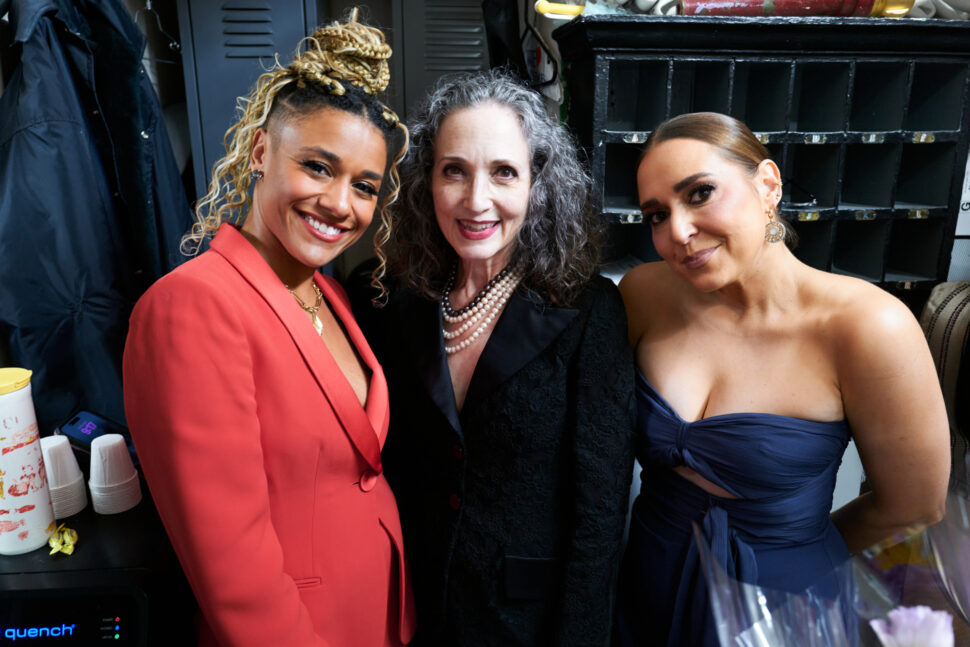
Ariana DeBose, Bebe Neuwirth, and Jessica Vosk

Original Broadway company of A Chorus Line

Jolina Javier, Baayork Lee, and J. Elaine Marcos

Wayne Cilento and Jay Armstrong Johnson

Wayne Cilento , Donna McKechnie , Baayork Lee, Kelly Bishop and Priscilla Lopez

Bebe Neuwirth and Mandy Gonzalez

Leigh Zimmerman, Kelly Bishop, and Priscilla Lopez

Company of A Chorus Line 50th Anniversary Celebration

Tony Yazbeck and Nick Adams

Jessica Lee Goldwyn and Tony Yazbeck

Company of A Chorus Line 50th Anniversary Celebration

Tony Yazbeck and Ryan Rodiño

Company of A Chorus Line 50th Anniversary Celebration

Company of A Chorus Line 50th Anniversary Celebration

Jessica Vosk, Leigh Zimmerman, and Krysta Rodriguez

Ariana DeBose and Anthony Wayne

David Wright Jr. and Jay Armstrong Johnson

Mandy Gonzalez

Priscilla Lopez

Jessica Vosk

Tony Yazbeck

Nick Adams

Baayork Lee and Jessica Vosk

Chris Ketner, Baayork Lee, and Hunter Regian

Annette Bening and Ariana DeBose

Jordan Chin, Anthony Wayne, E. Clayton Cornelious, Baayork Lee, Brandon Burks, , Donald C. Shorter Jr., and James T. Lane

Lauren Graham and Kelly Bishop

Kelly Bishop and Annette Bening

Darren Criss and Mia Swier

Christopher Sieber