The Kiss of the Spider Woman movie musical opened in movie theatres last week. If you saw it and know the Broadway musical on which it's based, you might have been surprised at much of what you saw on screen.
Jennifer Lopez is starring in the title role of the film version of the 1992 John Kander-Fred Ebb-Terrence McNally musical, with Tonatiuh as Luis Molina and Diego Luna as Valentin Arregui. Based on Manuel Puig's 1976 novel, the Kiss of the Spider Woman stage musical centers on a pair of cellmates in an Argentine prison. Valentin is a political revolutionary, while Molina is a queer window dresser who takes care of him by telling him the stories of his favorite films, many of which star his favorite movie star of all, Aurora.
Let's dig into how the movie differs from the 1992 stage musical. Perhaps needless to say, this piece does have some story spoilers, particularly in the final paragraph. You've been warned.

The biggest change is in the songlist. As tends to happen when Kander and Ebb musicals get the screen treatment, the non-diagetic songs have been mostly excised. And for those of you who aren't musical nerds, "diagetic" refers to songs—any music, actually—in movies that can be heard by the characters. In The Sound of Music, for instance, "Do Re Mi" is diagetic, because Maria is actually singing with the Von Trapp children. "Something Good" is non-diagetic, because Marian and Captain Von Trapp singing is heightened reality—the music is an artistic expression of their inner emotions.
WATCH: Jennifer Lopez, Tonatiuh, Bill Condon on Working With John Kander in Kiss of the Spider Woman
Bob Fosse did the same thing when bringing Kander and Ebb's Cabaret to the screen, cutting non-diagetic songs like "Perfectly Marvelous," and "What Would You Do." The movie Chicago made most of its musical numbers fantasy sequences, with all of the songs happening in Roxie's mind (aside from "All That Jazz"); any songs director-choreographer Rob Marshall couldn't make fit into that framework were removed.
Screenwriter-director Bill Condon (who also wrote the screen version of Chicago) has done a similar hatchet job on Kander and Ebb's Spider Woman score, cutting every non-diagetic song—with the major exception of Molina's "She's a Woman" (to the relief of Spider Woman fans everywhere). That meant we even lost fan favorites like "Dressing Them Up"; though if you know that song, you probably recognized its lyrics were pretty directly transformed into dialogue. Tonatiuh as Molina also hums that song's tune in a later scene.
Beyond the precedence set by Cabaret and Chicago, that choice makes a lot of sense for the world of film. Movies don't traditionally share the level of suspension of disbelief that stage musicals do. You can't trick a Broadway audience into thinking what they're watching is actually happening. But that's more or less the conceit of movies—that a camera happens to be capturing real things, which makes breaking out into song more difficult.
WATCH: Jennifer Lopez Performs 'A Visit' in Kiss of the Spider Woman Movie Musical
In the case of Kiss of the Spider Woman, the film's leads, Molina and Valentin, are mostly non-singing. Mostly. Condon also found a way to make the normally non-diagetic "She's a Woman" a fantasy sequence. He also brought in some completely new numbers. Well, kind of.
Another major change that was made to Spider Woman on its journey to the screen is in its framework. On stage, Molina is essentially sharing his obsession with the full film career of Aurora, telling stories from several of her films which then inspire several fantasy song sequences. Condon's screen version is closer to Puig's original novel, with Molina taking Valentin through the plot of one specific Aurora film in separate chunks as a kind of bedtime story. Also, in the film, the movie star is now named Ingrid Luna (played by Jennifer Lopez), who in the movie-musical-within-a-movie plays Aurora and the Spider Woman.
Condon also gives Molina and Valentin "roles" in the Ingrid Luna film, making them active participants in Molina's storytelling and driving home the way the movie musical metaphorically interacts with the grittier story that's happening to them in real life.

But that sadly, to me at least, meant dropping another story concept from the original Spider Woman: that Aurora's performance as the Spider Woman is the one performance of his beloved screen diva that truly frightens and upsets Molina. It's the film of hers he almost fully refuses to recount. This, of course, gives some weight to that inescapable kiss that Molina is headed for, a fear that perhaps comes from its inevitability. What does it mean that Molina feels that, even as a child? The film doesn't tell us.
With half of the songs excised, Condon also needed some new songs for the screen, ones that more directly fit into the plot of the film Molina is remembering. But Fred Ebb died in 2004! How do we get new Kander and Ebb songs in 2025? Well, you don't! There are three songs in the film that were not performed on Broadway: "I Will Dance Alone," "Never You," and "An Everyday Man." They all come from a pre-Broadway version of the musical that tried out at SUNY Purchase in 1990. The musical rather infamously mounted a fully staged and designed workshop production there while the show was still being written, only for the then-chief New York Times theatre critic to review it anyways, leading to a bunch of negative buzz and a delayed Broadway bow. Heavily revised, the show would ultimately play Toronto and London two years after that first staging before it finally came to Broadway, where the show beat the odds and won the Tony Award for Best Musical (and five other Tonys).
Ironically, in some ways, this film might be closer to that original version than to the Broadway iteration we're all familiar with—or at the very least a pretty healthy mix of the two.
READ: Did Reviews Get Caught in the Web of the Kiss of the Spider Woman Movie Musical?
But the great news here is if you liked Kiss of the Spider Woman on screen, the Broadway albums (both original star Chita Rivera and first replacement Vanessa Williams recorded cast albums) are essentially expanded versions of the score that are available for you to listen to now! Who doesn't love more of a great thing?
The other differences between the stage and screen are less major. On stage, Valentin is newly jailed and Molina is his roommate, whereas on screen, Molina becomes his roommate when Valentin is moved to a new cell during his incarceration. They also removed that the man Molina is jailed for being "indecent" with was a minor, as he is in the book and on stage. That's a concept that is understandable and, frankly, authentic in stories that take place in countries were homosexuality is still criminalized—it would be difficult to make the case that Puig wanted us to think of Molina as a pedophile. But that's, perhaps thankfully, a tricky concept to get into now, when the notion of queerness being illegal is a little more foreign (as this writer says hopefully).
For my money, the film also makes Molina more explicitly a trans character, but that has more to do with the vocabulary and understanding of that concept we have in 2025 that we didn't in 1992, much less 1976 (when the book was first published). I personally think anyone watching the original musical, or reading Puig's novel today, would definitely understand Molina as a somewhat unrealized trans woman, due to his identification with Aurora. And in this newest Kiss of the Spider Woman, Molina (who personally uses and is referred to with he/him pronouns throughout) seems to more explicitly understand "his" trans-ness. Molina gets a pronoun shift in the film's final moments, with the stage lyrics "His name was Molina" changing to "Her name was Molina." A poignant reminder that queer stories are not new and, in fact—considering this is the third retelling of Puig's novel—queer stories are timeless.
You can find a screening near you at KissoftheSpiderWomanFilm.com.
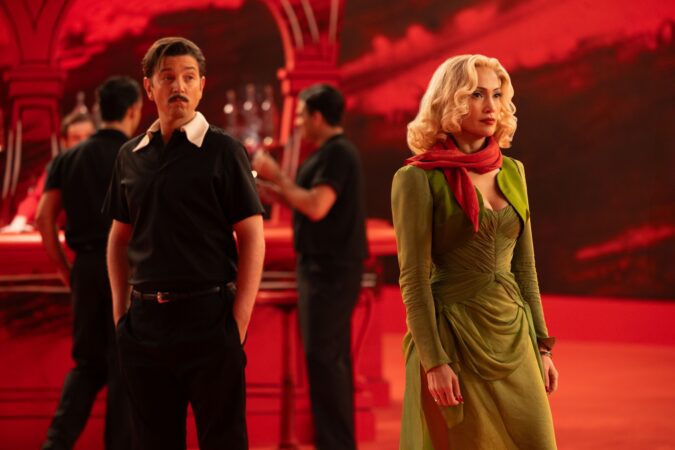
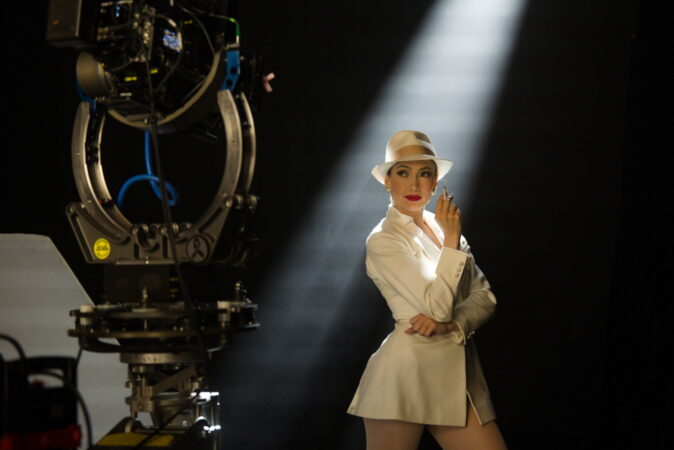
Jennifer Lopez in Kiss of the Spider Woman
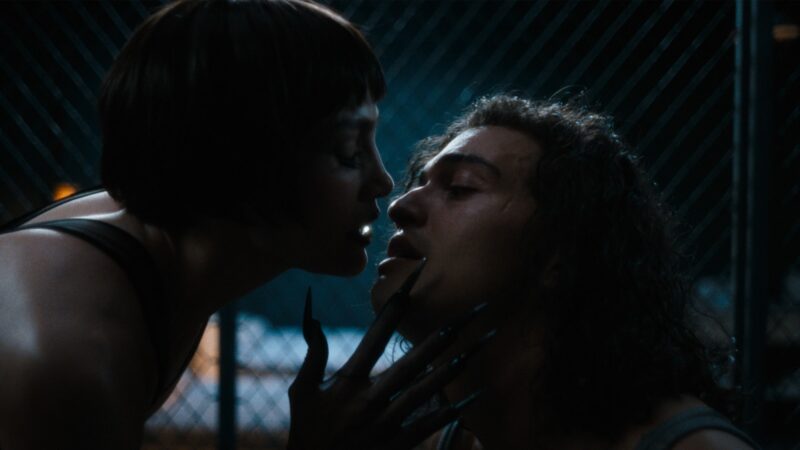
Jennifer Lopez and Tonatiuh in Kiss of the Spider Woman
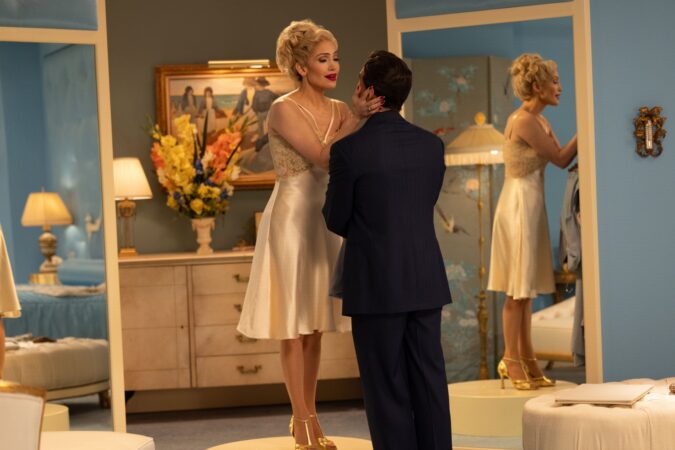
Jennifer Lopez and Tonatiuh in Kiss of the Spider Woman
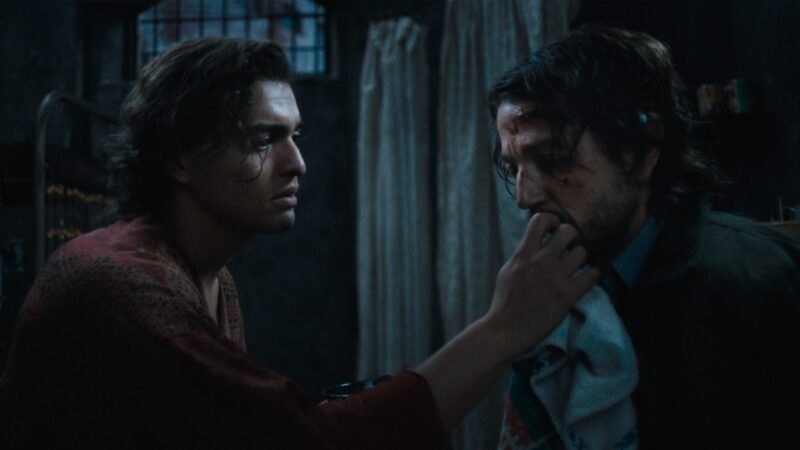
Tonatiuh and Diego Luna in Kiss of the Spider Woman

Tonatiuh and Diego Luna in Kiss of the Spider Woman
Diego Luna and Jennifer Lopez in Kiss of the Spider Woman

Tonatiuh and Jennifer Lopez in Kiss of the Spider Woman
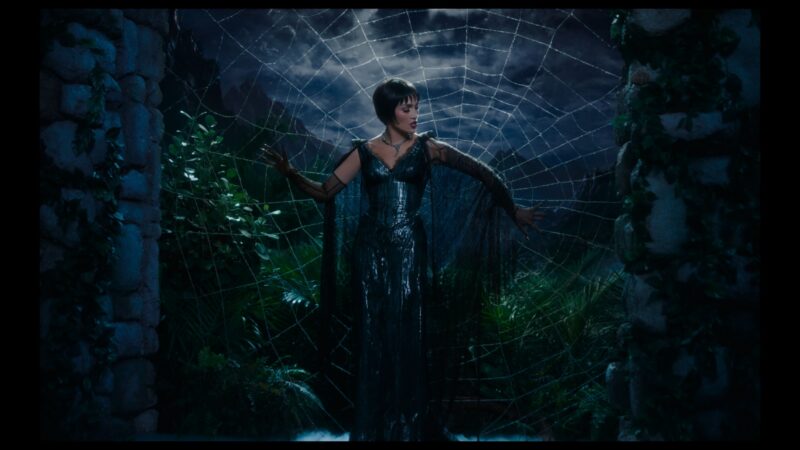
Jennifer Lopez in Kiss of the Spider Woman
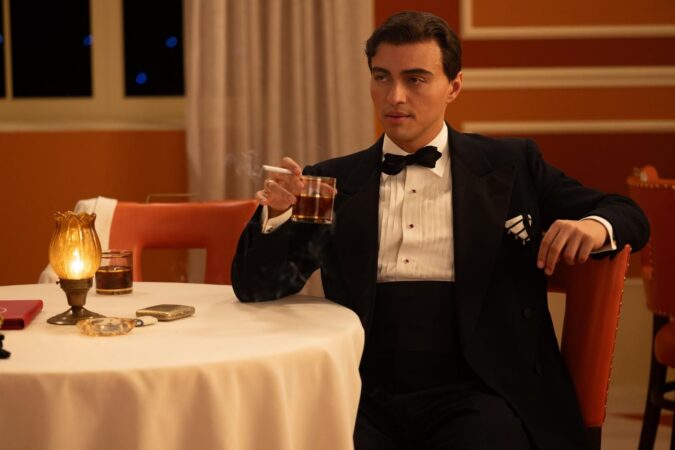
Tonatiuh in Kiss of the Spider Woman
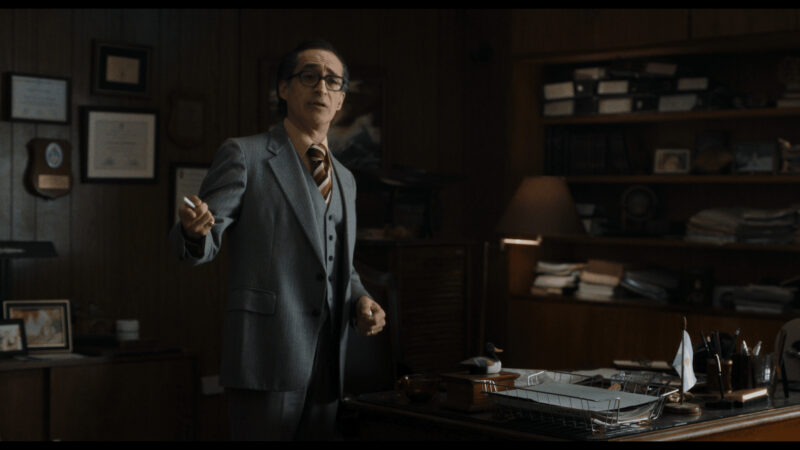
Bruno Bichir in Kiss of the Spider Woman