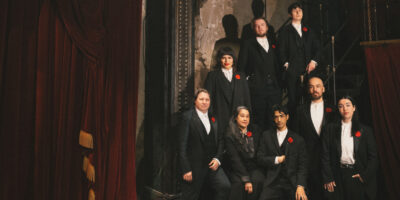
Earlier this year, Sleep No More closed after a 14-year run in New York. But Felix Barrett, who created the immersive hit with his company Punchdrunk, isn’t too upset about it. “Because Sleep No More was always just there, it felt like whenever I was here in town, I was looking after that show,” says the London-based theatremaker. “And so actually, now that it’s closed here, it's opened up new possibilities. Suddenly, it's like the doorway in my mind is open for new work.”
Ever since Punchdrunk opened Sleep No More in London in 2003, the company has become synonymous with that show—where audience members wore masks and followed performers around five floors of a building, in a story reminiscent of Macbeth. Sleep No More even had a run in Shanghai and will begin performances in Seoul August 21. It also inspired a legion of similarly structured productions (including the recent short-lived Life and Trust).
But after a show as sprawling and large as Sleep No More, Barrett wanted Punchdrunk’s next show in New York to be something different, something an audience who had become used to immersive work hadn’t experienced before. Enter Viola’s Room, which is currently running at Off-Broadway’s The Shed, and welcomes groups of just six audience members at a time.
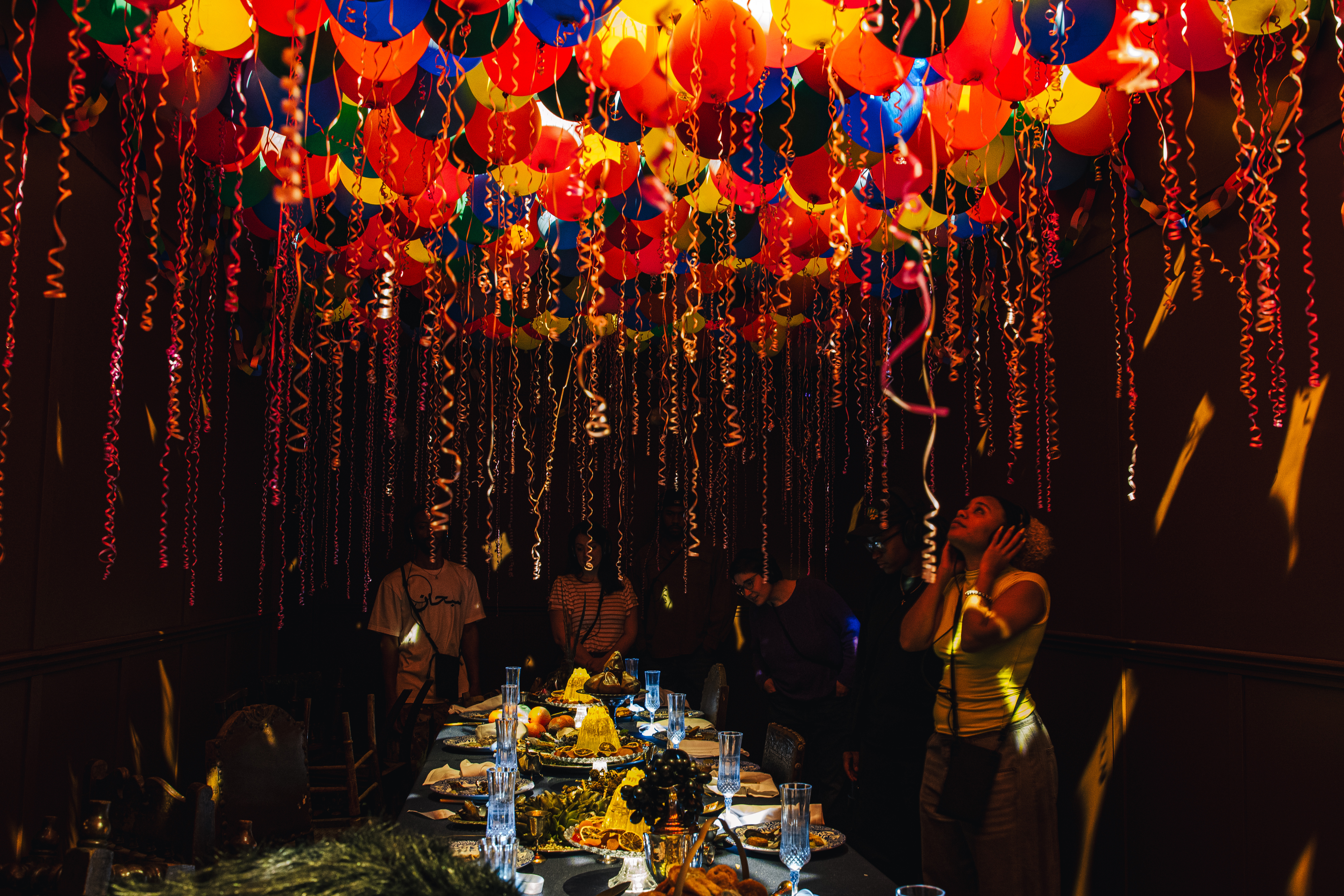
Compared to Sleep No More, where audience members could wander wherever they wanted, Viola’s Room is more compact. The show is only taking up one floor at the Shed, and audience members walk a predetermined path. That’s not to say it’s a short walk—the space is 12,500 square feet. But here’s the unexpected thing: The audience members walk through the space barefoot, and there are no live actors—instead they hear a narrative through a personal headset, spoken by Helena Bonham Carter.
“After Sleep No More, which was a vast, sprawling epic, I wanted to try and distill the potency and the atmosphere within that, but try and create the most intimate version of it,” explains Barrett. “And so the idea of having the amazing Helena Bonham Carter actually almost whispering, her lips almost touching your ear and narrating, guiding you…that was going to achieve the purest form of theatrical impact.”
Getting Bonham Carter to record her voice for the show wasn’t actually too difficult—she had seen Punchdrunk’s other shows in the U.K. “One phone call, she jumped straight in,” remarks Barrett happily.
Viola’s Room is inspired by the Barry Pain fairy story The Moon Slave, about a princess who is engaged to be married. But shortly before her wedding, she is pulled by supernatural powers to a forest, where she is compelled to dance to music only she can hear. After, once a month on the full moon, Viola is pulled back into the forest. The story ends on a disquieting note.
Daisy Johnson has adapted The Moon Slave for Punchdrunk, but that is just one piece of the puzzle. Audiences begin in the bedroom of a teenage girl living in the ‘90s, who loves Leonardo DiCaprio, Tori Amos, and fairy stories. They then physically crawl into the world of Princess Viola—where there are mazes and trees, a sumptuous feast, a spooky church, a pit of sand, and many more memorable environments (the spaces were designed by Casey Jay Andrews). Though Punchdrunk played around with using live actors in Viola’s Room, Barrett decided to keep it performer-less to keep the focus on the audience members.
In one moment at a recent showing of Viola’s Room, I was forced to walk through a tight space in the dark, where the walls were closing in around me, and I couldn’t see anyone in front or behind me. That concept of being utterly alone, it gave the work a visceral sense of danger that I’ve rarely felt in recent immersive experiences—before the room opened up again and I saw something that (I won’t tell you what it is) left me utterly awed.
“It's a coming-of-age ritual—that amazing point where you're on the cusp of adulthood,” Barrett says of his attraction to The Moon Slave. “You're actually in that liminal space between childhood and adulthood, and it's deeply magical. It's deeply melancholic, in a way, because it can only last for a tiny moment. But it's so exhilarating because you're straddling two different worlds. And so, we really wanted to convey that within the piece and offer audiences a chance to step back into their own childhoods for an hour.”
Though audience members are able to touch and inspect the different objects in Viola's many rooms, they can’t linger long before being pulled by Bonham Carter’s voice and some meticulously timed lighting cues to the next destination. Two-time Tony winner Gareth Fry did the sound design, while Simon Wilkinson did the lighting design—the show has over 2,000 light cues and chiefly relies on teeny tiny LEDs called grains of barley.
While in Sleep No More, audience members were clamoring for moments where they could be separated from the dozens of people around them, Viola’s Room offers a kind of “bespoke” intimate experience that Barrett hopes will surprise audiences.
“When we first opened Sleep No More, there weren't many other things like it. We were inspired by the visual arts and art installation practice,” he explains. “I think there's a shift now. We're in the second era of [immersive theatre]. We're trying to innovate and push the practice further. It's really important for me that an audience doesn't quite know what they're going to get. If an audience can preempt the experience, then we've slightly lost the battle. I always want an audience to not know what's behind the door. ”
Shed Artistic Director Alex Poots first experienced Viola’s Room in London. As a longtime friend and admirer of Barrett’s, bringing the experience to New York was a no-brainer. And luckily, Poots ran a center that has both traditional theatres and visual arts spaces that are essentially blank canvases.
Poots notes that in recent years, the term “immersive” has become, as he puts it, “almost meaningless,” with many companies using that moniker to describe “spray paint[ing] digital visuals in a room.” That was why to him, it was important to bring Punchdrunk, who he considers the “pioneers of this art practice of immersive work,” back to New York. As he notes: “there's all these people who have not seen or experienced a new Punchdrunk show until now, unless they've traveled to the U.K.”
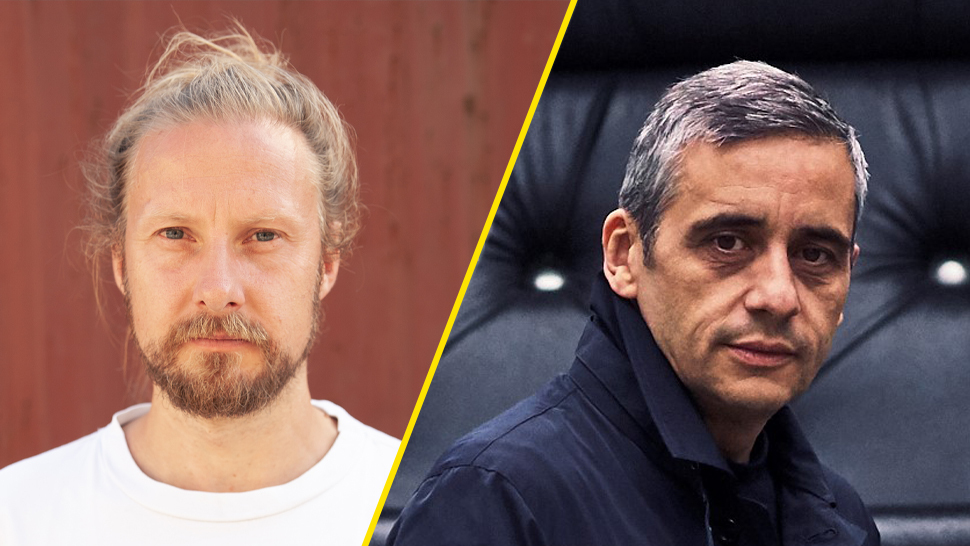
Adds Poots: “What Felix was able to do with Sleep No More was to create this agency between the artist and the audience, where you were far more alive as an audience member. And I think he's cracked the code for the next chapter in what's possible.” Poots then turns to Barrett. “I remember, when we talked about it last summer, I went, ‘We're going to clear the decks to make this happen.’ When someone takes a step forward that significantly, you just have to support it.”
Remarks a visibly moved Barrett, as Poots touches his shoulder: “Thank you so much.”
Viola’s Room is currently running six days a week, for a few hours a day (on Saturdays, the room is open for a staggering 10 hours). Ticket prices are much more affordable than for Sleep No More (which usually charged triple-digit prices); Viola’s Room tickets start at $54. The show is currently scheduled at The Shed until October 19, though Poots says he is open to extending it further if audience demand is there.
And as someone who's walked through Viola’s Room four times, Poots encourages multiple visits: “Each time I go back, I discover all these new things, not only in the room, but actually, because sometimes you're focusing on something in the room that you didn't hear everything that Helena said—each time I go back, it's rich enough to discover new things.”
Adds Barrett: “I think that's what we try to do at Punchdrunk: You don't know what's behind the door. But if you go in, it will blow your mind.” And according to this reporter, speaking from firsthand experience, he is right.
Visit TheShed.org.


Viola’s Room, presented by The Shed and Punchdrunk

Viola’s Room, presented by The Shed and Punchdrunk

Viola’s Room, presented by The Shed and Punchdrunk

Viola’s Room, presented by The Shed and Punchdrunk

Viola’s Room, presented by The Shed and Punchdrunk
Viola’s Room, presented by The Shed and Punchdrunk