%20Liam%20Robinson%20(Musical%20Director)%20and%20Rachel%20Chavkin%20(Director)%20in%20rehearsal%20for%20Hadestown,%20Nation.jpg)
When Hadestown first opened on Broadway in 2019, audiences were swept into a world of gods, lovers, and laborers, brought to life by a band that was very much on stage, as visible as any performer.
At the center of that musical heartbeat is music director Liam Robinson, who has been with the show since its first steps at New York Theatre Workshop in 2016. In the years since, Robinson has helped Hadestown evolve across continents, maintain its soul, and stay as thrilling and alive as it was on opening night. And he's also onstage every night, conducting Hadestown's personality-filled seven-piece band.
Robinson’s path to Hadestown was a little unorthodox. “I kind of snuck in the back door,” he recalls with a laugh. “I was not climbing the music director ladder. I was really just in the touring music world and making records.” Producer Todd Sickafoose, who had worked with Robinson before, put his name forward to composer Anaïs Mitchell, and soon he was sitting down with her to start crafting what would become Broadway’s most distinctive soundscape in years.
Back then, Hadestown was a 300-seat Off-Broadway curiosity, performed in the round at New York Theatre Workshop. Robinson fondly remembers showing photos of that first set to the Australian company years later, noting “the evolution of the set from that very cool space you wanted to hang out in, then it went into proscenium and had some growing pains to get back to the shape it’s in now.”
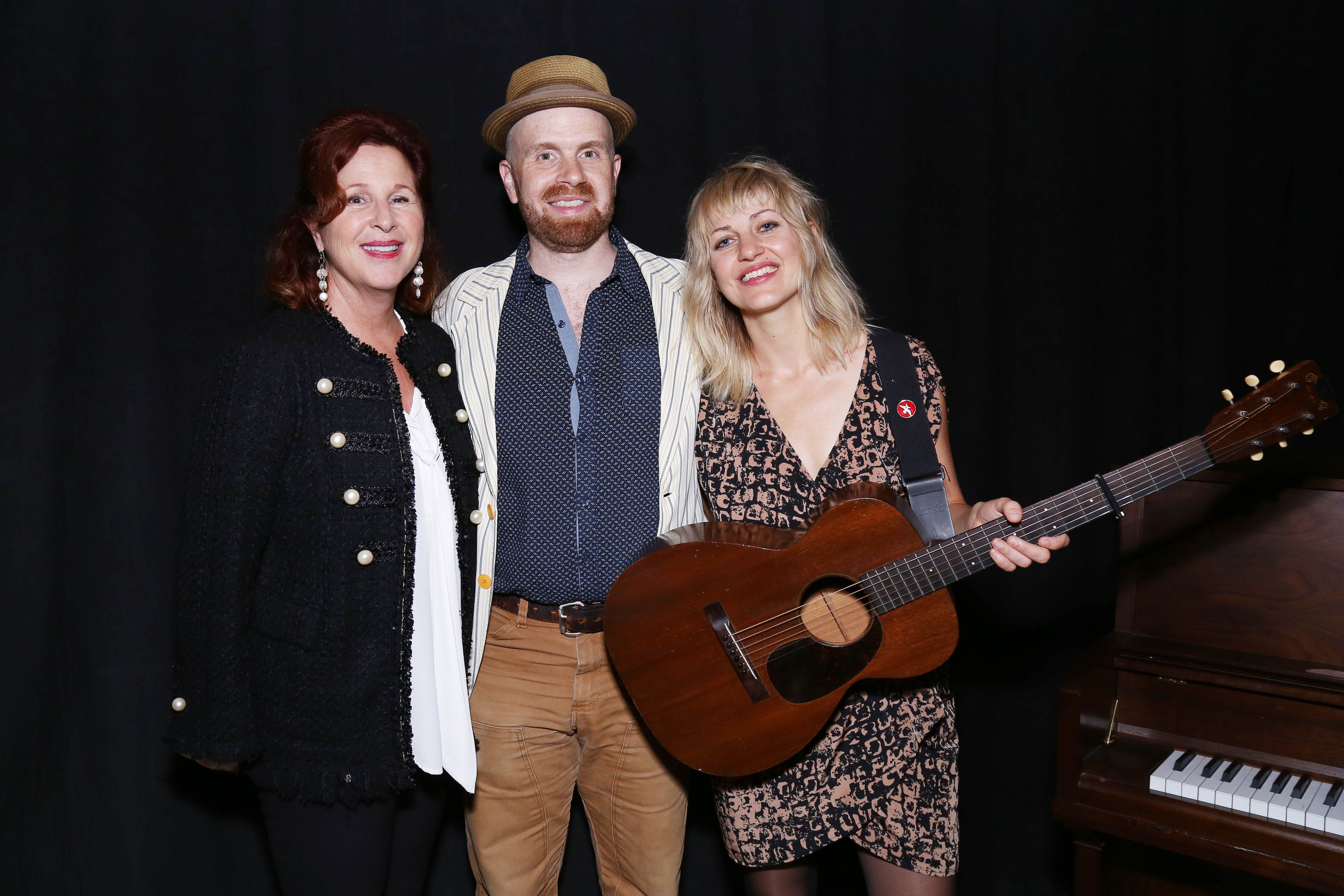
Those growing pains were a reflection of Mitchell’s process. “Anaïs is a tinkerer,” Robinson says. And Hadestown was never meant to freeze in amber. In theatre, “frozen” describes the moment a show locks its script and score for opening night. But for Robinson and Mitchell, that idea felt contrary to the ethos of the show. “She’s just a true collaborator,” Robinson explains. “There’s never been an interest in this show in cloning. One of the beautiful things is these characters seem to hold a lot; they hold a lot of the people that inhabit them.”
That openness keeps Robinson inspired. “As other productions get open, I’m interested in bringing people’s selves—what those actors and musicians are bringing.” The result? Different bodies, genders, and native accents have expanded the archetypes in ways Robinson says feel endless. “We haven’t broken them yet.”
For instance, take the character of Hades, a role defined by an actor with a bone-rattling bass. Patrick Page’s supernatural basso profundo was iconic, but Robinson loves the fresh colors each new actor brings to the role—even if their voices don't get quite as low as Page's. “We just find where it’s going to live in their bodies,” he explains. Despite the extreme demands, they don’t change keys. Instead, they use “octave displacement or clever melodic reroutes” to help new Hades actors access the character’s menacing rumble without rewriting the score.
That careful balance of adaptation and fidelity extends to more subtle details, like the chilling tempo of “Nothing Changes,” the Fates’ unaccompanied trio that has grown more hair-raising over time. Like cold water down your back, the track has evolved significantly since the beginning of the Broadway run. “Every Fate trio has a different way of approaching that song. It’s the most flexible one they sing because it’s unaccompanied, and I just try to maximize their instincts.”
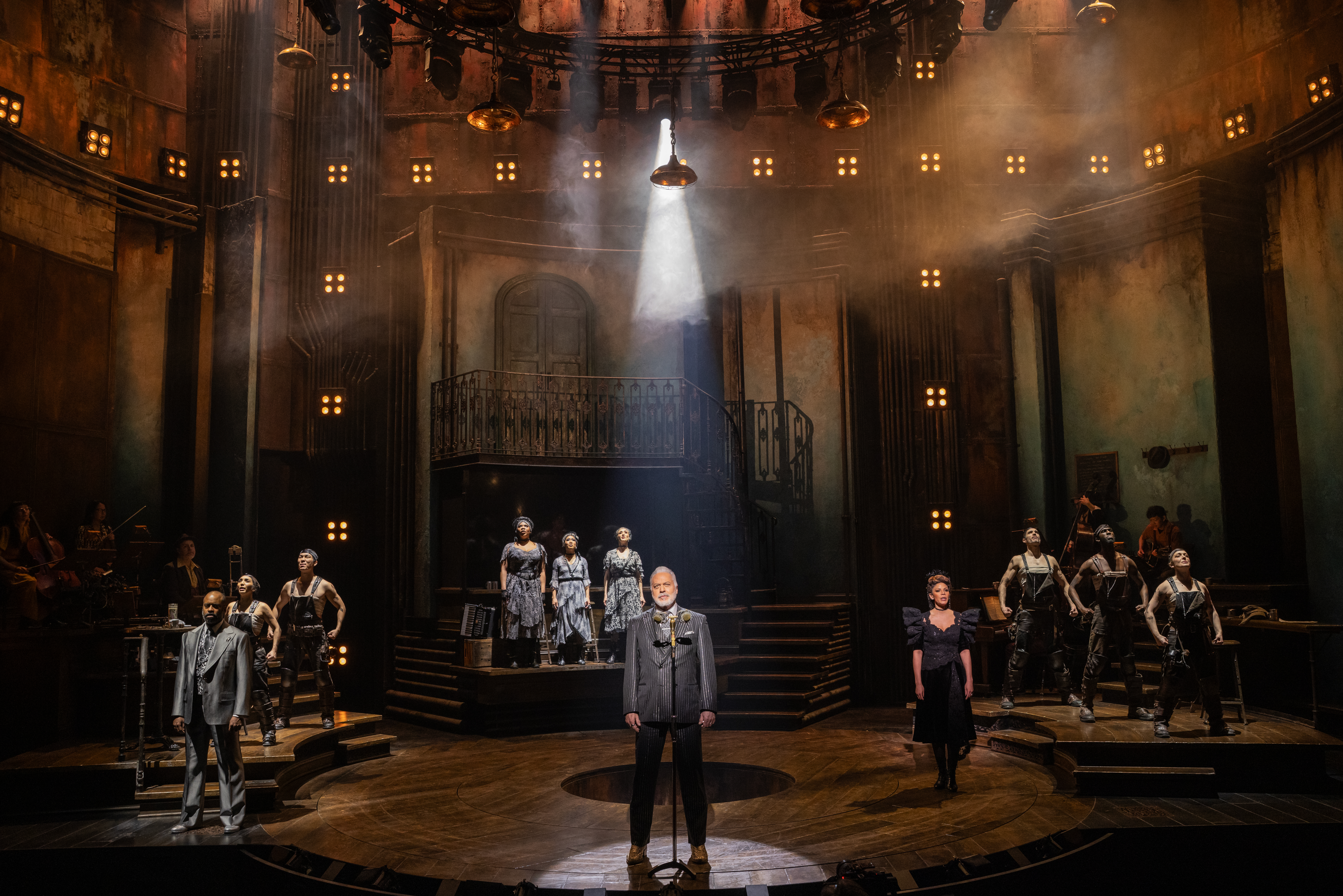
Even after years, the show’s surprises haven’t dulled for Robinson. He points to “Doubt Comes In” as a moment that captures everything Hadestown does best. “Most people on stage are singing, and the orchestrations create an orchestral palette out of a seven-piece band. It’s pretty masterful.”
That small-but-mighty band is a star of the show. Hadestown calls out its musicians by name, and Robinson credits that visibility with keeping everyone engaged: “The fact that the music never stops and you’re never hidden: it keeps us in it.” There's no checking out mid-performance here; Robinson says there’s no hiding in Hadestown. “You’re seen. And that’s good.”
The original Broadway band were also a crew of newcomers: “None of us had ever held a chair on Broadway,” Robinson recalls. That outsider spirit has informed the way Robinson has approached hiring subs (replacements). “We’ve made it part of our mission to diversify the pool of subs. The pit world can be a super nepotistic one; we want to bring new people into that world.” It’s a quiet revolution for a field that often clings to old networks.
Of course, being onstage means there’s nowhere to hide when things go wrong. Robinson laughs when asked about on-the-fly fixes: “Live theatre is live theatre. Someone’s headphones aren’t working, they run off stage.” Though he admits there haven't been any gigantic mishaps.
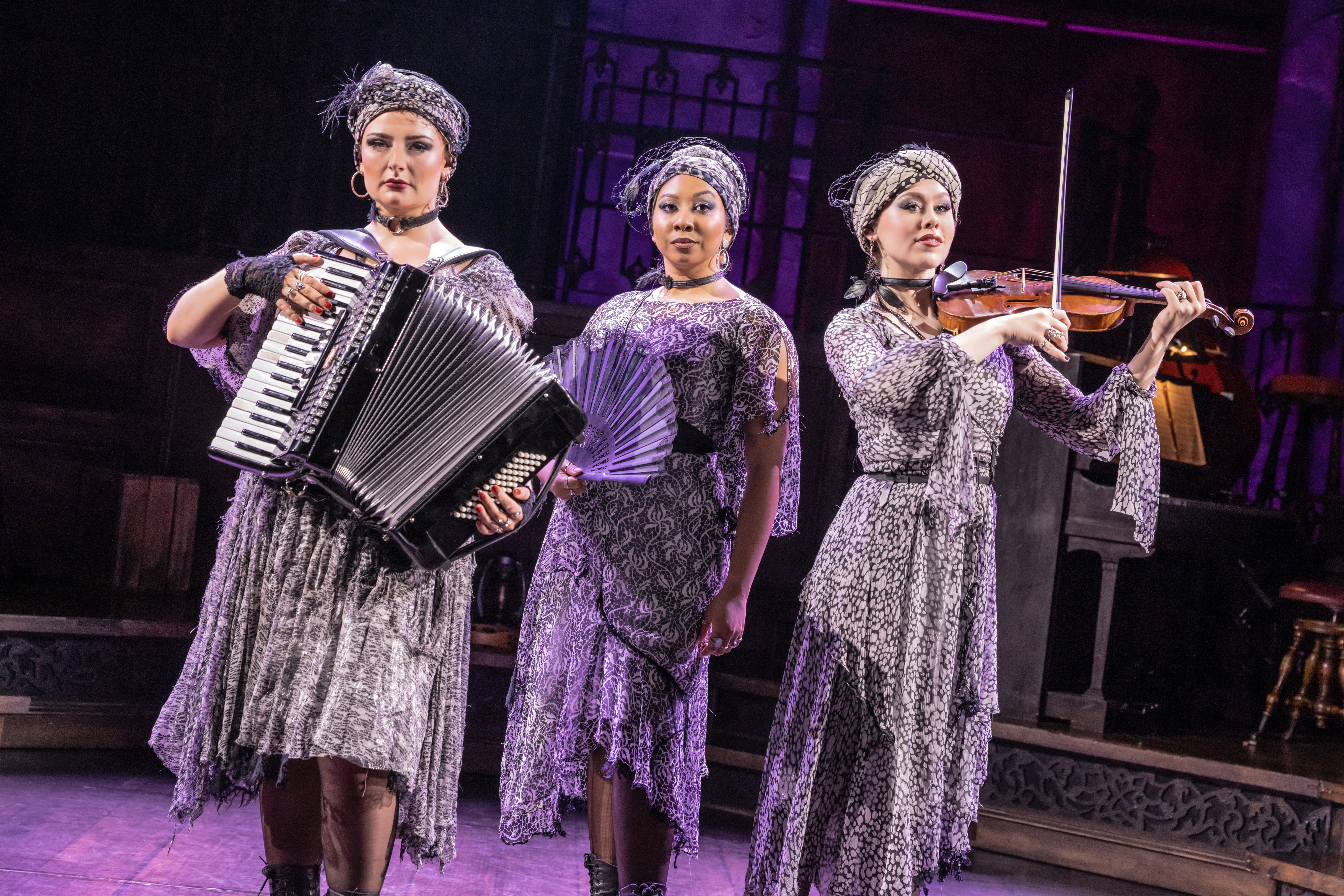
Robinson's especially grateful that Hadestown never had to pare down the band during the pandemic, even when COVID closures and staffing crises upended many shows. “We were lucky. The tour is a different story—they’re just out there in America,” he says with a knowing chuckle.
And Robinson does love the view from his onstage perch. His favorite moments? “After the first number, I get a pretty good break, and it’s always fun to watch Hermes set the table and bring the characters to life.”
Among Hadestown’s many powerful songs, he has a soft spot for “How Long,” the first song Mitchell wrote for the show: “I’m a songwriter myself, and the craft of those duets—before she even knew what she was making—has always been something I admire.”
Mitchell’s craft has inspired him to create, too. While he’s coy on details (“Stay tuned,” he teases) Robinson confirms he’s developing new projects. “I’m working with other songwriters on new things, finding that niche between folky songwriters who mostly exist outside theatre, but who I can help bridge into theatre. It’s a really fun space as an arranger and orchestrator.”
Over six years on Broadway, Robinson’s biggest through-line has been creating a safe space for artists to bring their whole selves: “I think people come to performance with ideas of what parts of themselves they’re supposed to bring. I try to open up that they’re invited to bring their whole self—though it’s based on consent. It’s an ongoing journey.”
That foundation matters, because once a show is open, the director and writer aren’t in the building nightly—but Robinson is. He’s the creative anchor for each new performer. When asked which Hadestown character he relates to most, Robinson lights up: “Probably Hermes, in a puckish kind of way,” he says, reflecting on the role’s mischievous joy.
For the music fans who return again and again, Robinson hopes they’ll listen for the layers of “Doubt Comes In”—a testament to what his small band can achieve. “It’s where you really hear how much we get out of a seven-piece band,” he says. “Everything is extremely layered at that point.”
Robinson’s onstage suit—often noted by fans for how effortlessly it seems to belong to him—was a collaboration with the costume designer. “It’s been well remarked upon that it looks like I’m wearing the clothes I wear every day,” he says, grinning.
Six years on, he still keeps the same playful ritual before each show: “I get dressed as late as possible. It feels like Superman—like I’m transforming right before the show.”
That humor and grounded-ness have helped keep Hadestown feeling alive. From London to Calgary to Australia, Robinson has guided the show’s growth, with each new company asking: What does this myth become in our hands?
For Robinson, that’s the enduring gift of live theatre: the chance to breathe fresh life into timeless stories. “It’s the archetypes—Hades, Persephone, Orpheus, Eurydice, Hermes—who are endless,” he says. “And as long as they endure, so will this show.”

Myra Malloy, Daniel Breaker, Ali Louis Bourzgui, and company of Hadestown

Myra Malloy in Hadestown

Myra Malloy and company of Hadestown

Myra Malloy and Ali Louis Bourzgui in Hadestown

Ali Louis Bourzgui in Hadestown

Ali Louis Bourzgui in Hadestown

Ali Louis Bourzgui, Myra Malloy, and company of Hadestown