


What happens when a woman known around the world for her aristocratic restraint turns her gaze toward one of Hollywood’s most uncontainable legends? This summer, Elizabeth McGovern returns to the New York stage with AVA: The Secret Conversations, a play she also penned, where she dives deep into the turbulent, glittering, and deeply human life of Old Hollywood legend Ava Gardner. For McGovern, it’s not just a role; it’s the culmination of nearly a decade’s worth of creative excavation.
The earliest iteration of AVA premiered in London, followed by a full production in Los Angeles. With each version, McGovern has returned to the material with a sculptor’s eye, reshaping and refining. “It’s like the Rolls Royce of theatrical experiences,” McGovern shares from a quiet corner in her London flat, shortly before rehearsals for the Off-Broadway production begin. “Most of the work we do is like living in a first draft. Now, it’s just so much fun to be in something that’s honed and lived in a bit, and I can just dive in that much deeper.” AVA runs July 29–September 14 at New York City Center.
That depth comes not only from Gardner’s dramatic life, but from what she represents. McGovern is highly aware of what audiences already know about Gardner: her renowned beauty, her high-profile marriage to Frank Sinatra, Barefoot Contessa, and the 1951 Show Boat film. “It’s everything she represents, in terms of the era when movies were movies,” McGovern explains, referencing the golden age of the Hollywood studio system. “Both the cost of that, in terms of the system and the people who had to participate in it, but also the beauty and magic of it.”
While ostensibly very different on the surface, there are a handful of key similarities between Gardner and McGovern that align their life paths in unusual ways. Both are known for playing characters with an emotional opacity, simmering just underneath the surface. Both possess a striking beauty that has shaped the arc of their careers, be it Gardner’s uncompromising sensuality as Hollywood’s leading femme fatale, or McGovern’s delicately Edwardian beauty that has perfectly suited her for period pieces. And, perhaps most notably, both Gardner and McGovern are Hollywood expats, having fled the American fame machine for London in search of a steadying peace.
“I can bring my personal experience to her story really easily,” McGovern shares, pausing briefly to look out the window of her home. “I think in a smaller, more manageable way, I experienced that same kind of early stardom. I’m not at all implying that it was anywhere near as big as Ava Gardner, but I got a taste of what it feels like, in a lesser degree.”
McGovern’s career began with the kind of velocity most actors only dream of. Plucked from Juilliard while still a student, she was catapulted into Hollywood’s inner circle almost overnight. By the time she was 20, she’d earned an Academy Award nomination for Ragtime and went on to star opposite some of the most iconic leading men of the 1980s: Robert De Niro in Once Upon a Time in America, Timothy Hutton in Ordinary People, Sean Penn in Racing with the Moon, and more. Her face was everywhere, her path seemingly cemented.
And then, just as swiftly, she stepped off the Hollywood treadmill. By the early 1990s, McGovern had relocated to London, trading celebrity for a quieter creative life, driven more by the roles she chose than the spotlight that once chased her.
That early brush with fame has stayed with her, not just as a memory, but as a lens through which she approaches characters like Gardner. “I feel akin to a character who just does things her own way.” Though she’s quick to clarify she never reached the same level of celebrity, McGovern recognizes in Gardner the same instinct for sidestepping the machinery of fame in favor of something more self-directed. “The fact that we both ended up in London, I think speaks to something kind of identifiable that I feel for her,” she says simply.
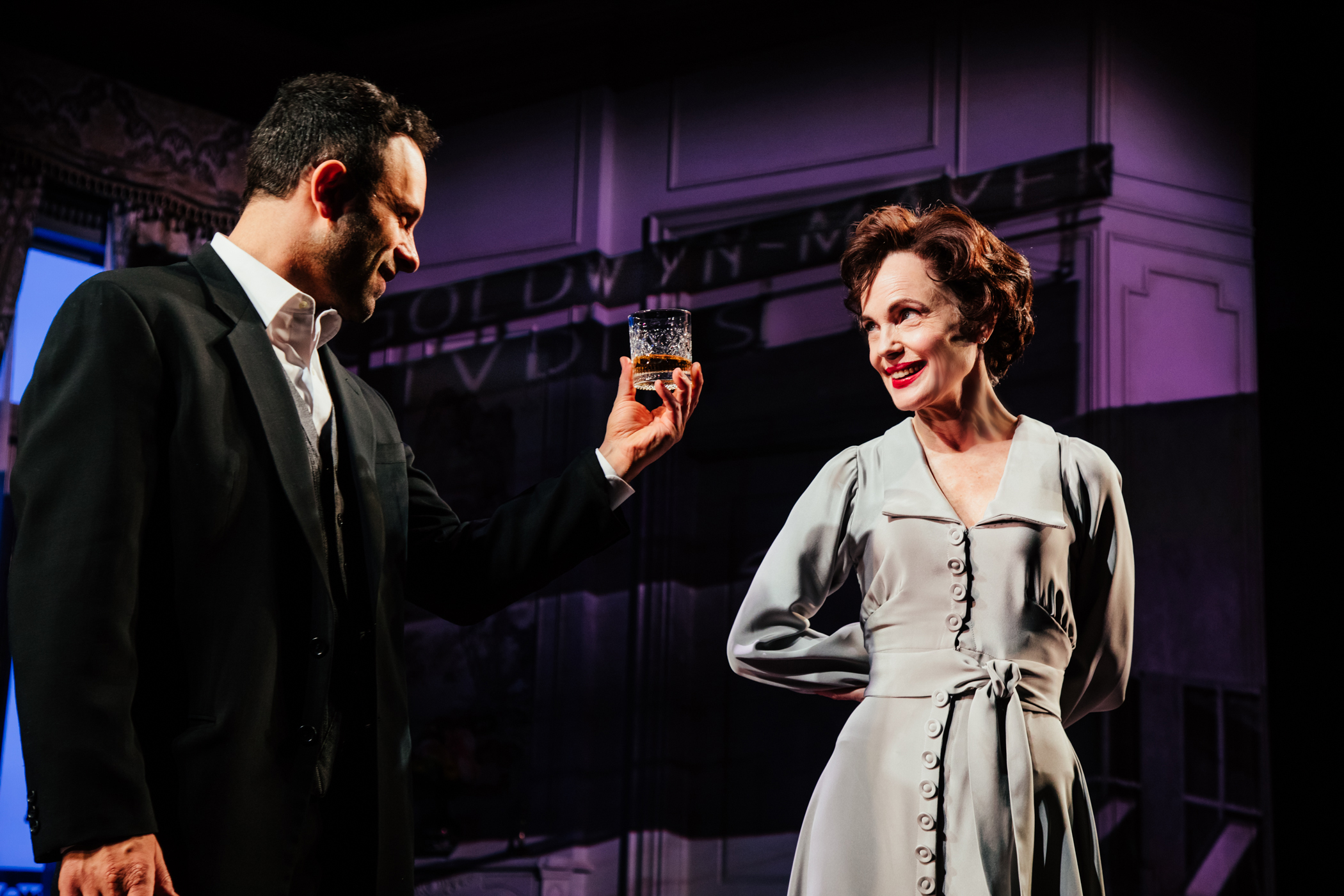
In Ava Gardner, McGovern sees something rare: a woman who wielded power in the mid-20th century on her own terms, albeit often behind the scenes. “She was a feminist without ever carrying the banner,” McGovern says. “And she's a feminist in the sense that women since time began have been feminists: the women that just did what they wanted and got what they needed out of life.” There’s admiration in her voice when she speaks about Gardner’s unapologetic hunger for self-determination. “She embraced her own appetites in every way and lived life her way, and I think that's why she is iconic today.” It’s Gardner’s intelligence, subtle and instinctive, that seems to strike McGovern most. “She just was kind of naturally smart. She came from very little education, very little money, and she just was smart enough to figure things out.” Gardner’s resistance to easy categorization—rural-raised, wildly glamorous, instinctively progressive without the academic polish often associated with it—gives the play its heartbeat.
AVA: The Secret Conversations is based on discussions Gardner had late in life with British journalist Peter Evans. Their real-life interviews became the foundation of a book, and McGovern’s stage adaptation pulls the verbatim dialogue into a theatrical frame. This is not a typical solo show; the play features two characters, Ava and Peter (played by Aaron Costa Ganis), engaged in a dynamic, often charged exchange.
“What really intrigued me was the fact that something’s happening between Peter and Ava. It’s not just somebody telling stories—they go on a journey together, which for me, is a kind of journey toward intimacy,” McGovern explains. “She relives her past through him. They actually have this experience of falling in a kind of love, born out of this mutual creative endeavor.” For McGovern, this structure gives the play energy; it is not a static reminiscence, but an unfolding relationship.
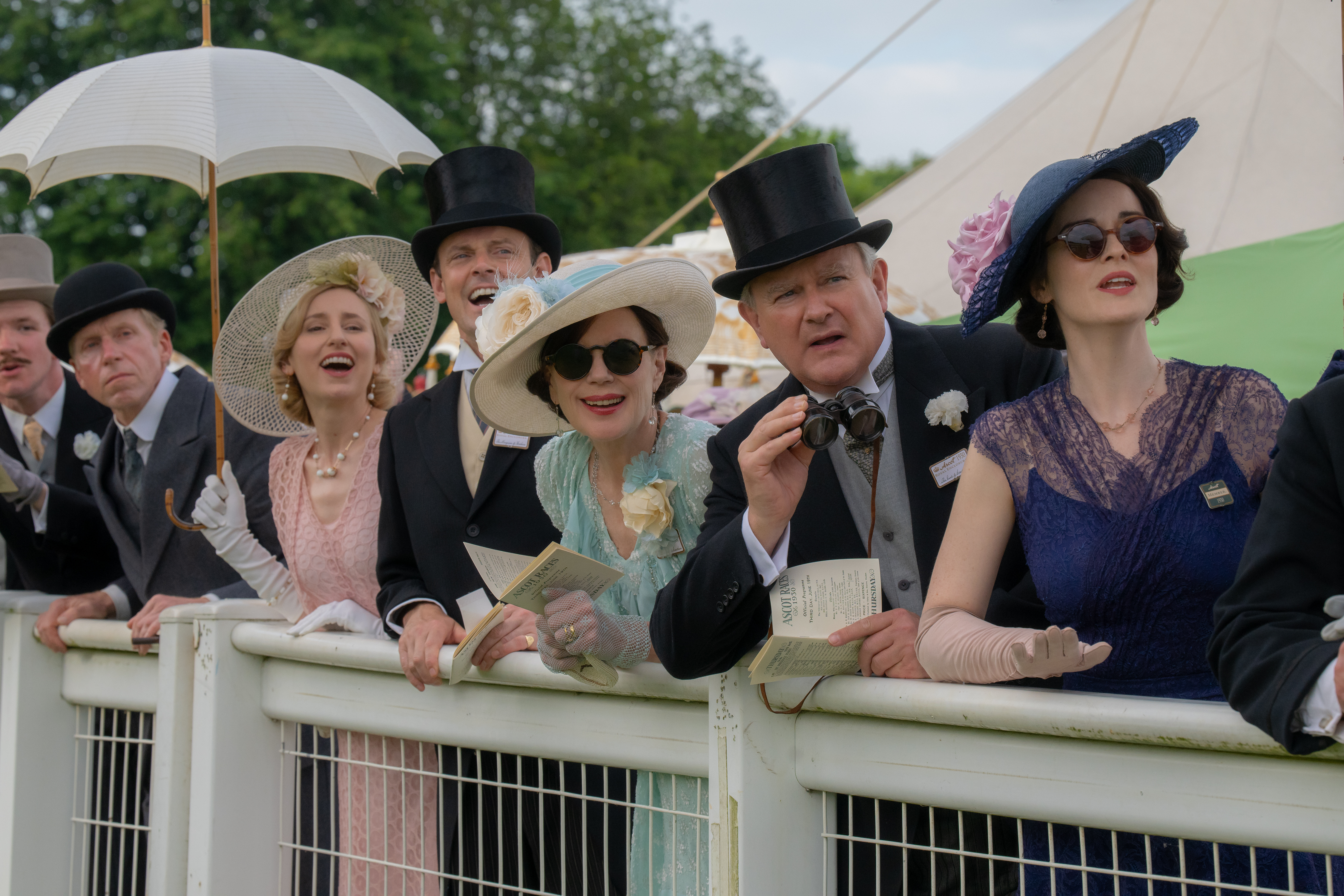
The act of falling in creative love is close to McGovern’s heart. With the final Downton Abbey film finished, she is saying farewell (for real this time) to the role of Cora Crawley. Downton Abbey: The Final Chapter releases in movie theatres September 12, intersecting with McGovern's final performances in AVA.
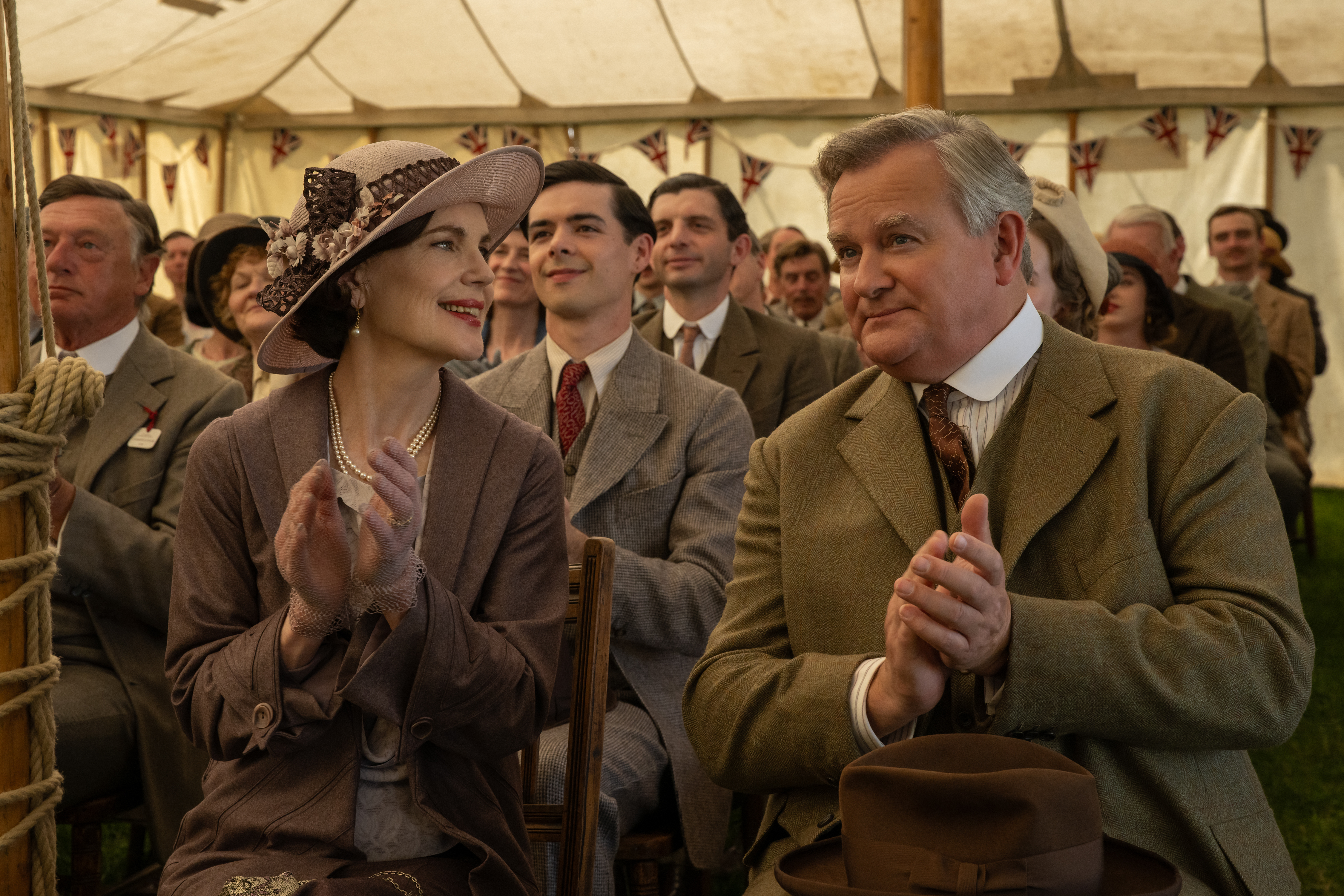
“It was so much more genuinely emotional than I would have expected,” McGovern shares, thinking back to her final day on the set of Downton. “Because of the very fact that we’ve done it for so long, it has genuinely bonded us in a different kind of way. I felt punched in the gut by the end.” Of course, this isn’t the first time the Downton family has bid each other farewell. The series ended in 2015, only to return for not one but, now, three feature films. “We’ve said goodbye a couple of times now,” McGovern says with a wry smile. “So it’s easy to be a little skeptical when you hear, ‘This is really it.’ But this time… it does feel different.”
McGovern notes that Dame Maggie Smith, a towering presence in the Downton world, was deeply missed in this final film. The warmth and respect in McGovern's voice leaves no doubt about the profound affection she holds for Smith, who died last year at the age of 89 and whose character died in the second Downton film, A New Era. Over the years, their characters shared countless scenes, subtle glances, and tense interactions that shaped much of Downton’s emotional core. The absence of Smith in the final film was keenly felt by the cast and crew alike. “I thought she was there every single second,” McGovern reflects, a quiet reverence in her tone. “She’s there in the fabric.”
In short, after 15 years of playing Cora across continents, wars, and eras of social change—McGovern says she’s ready to move on. “I feel the door is closed; I feel when we say goodbye, we really mean it. This is goodbye.” And though the audience may not be ready to let go just yet, McGovern sounds quietly certain—she’s turned the page. She didn't even take any props from the Downton set. “It’s over. It’s gone,” she says, matter-of-factly.
Following AVA, McGovern is scheduled to return to television, stepping into the world of Anne Rice with AMC’s Talamasca: The Secret Order, a supernatural series set to premiere October 26. She will play Helen, a seasoned veteran of the secretive organization, and the leader of its New York Motherhouse. The role offers McGovern the opportunity to let down her hair and work in a contemporary landscape, rather than the period pieces that have defined much of her career. It also allowed her to dive into a genre she has never before explored.
“It’s something completely different for me,” she shares, smiling. “It opens up this magical world; the creators make up the rules. I love it.” While tight lipped about specifics regarding the secretive production, she laughs lightly to herself when asked if there is any throughline between Cora, Ava, and Helen.
After a brief pause, she chooses her words carefully. “I think I’ll have to leave that for the viewers to decide… John Lee Hancock [the show’s co-showrunner] is a very persuasive person, that much I can say.”
Regardless of standing NDAs, it is clear that Helen will exist in a similar emotional texture to McGovern’s previous characters, simply due to her position of power. For Ava Gardner and Cora Crawley, that power was wielded behind the scenes, exercising enormous influence without necessarily appearing to do so. “There’s a fascinating similarity,” McGovern agrees, referring Ava and Cora. “These women cannot be the one at the forefront of the power, but they are very much the ones using soft power to shift the world.” That dynamic, of women behind the curtain calling the shots, feels ever present in McGovern’s creative orbit.
She is keenly aware of what Gardner sacrificed in return for a life of independence and fame. “She had a hell of a good time,” McGovern says firmly, “but she also paid a price.” That price, McGovern explains, is often not obvious until much later: a kind of psychic taxation, particularly on intimacy. “You lose your ability to be intimate in the same kind of way. You become someone’s collateral. Even if you are not, you feel like you are in danger of becoming it—it poisons intimate interactions,” she says. Gardner was never self-pitying, but she was not untouched.
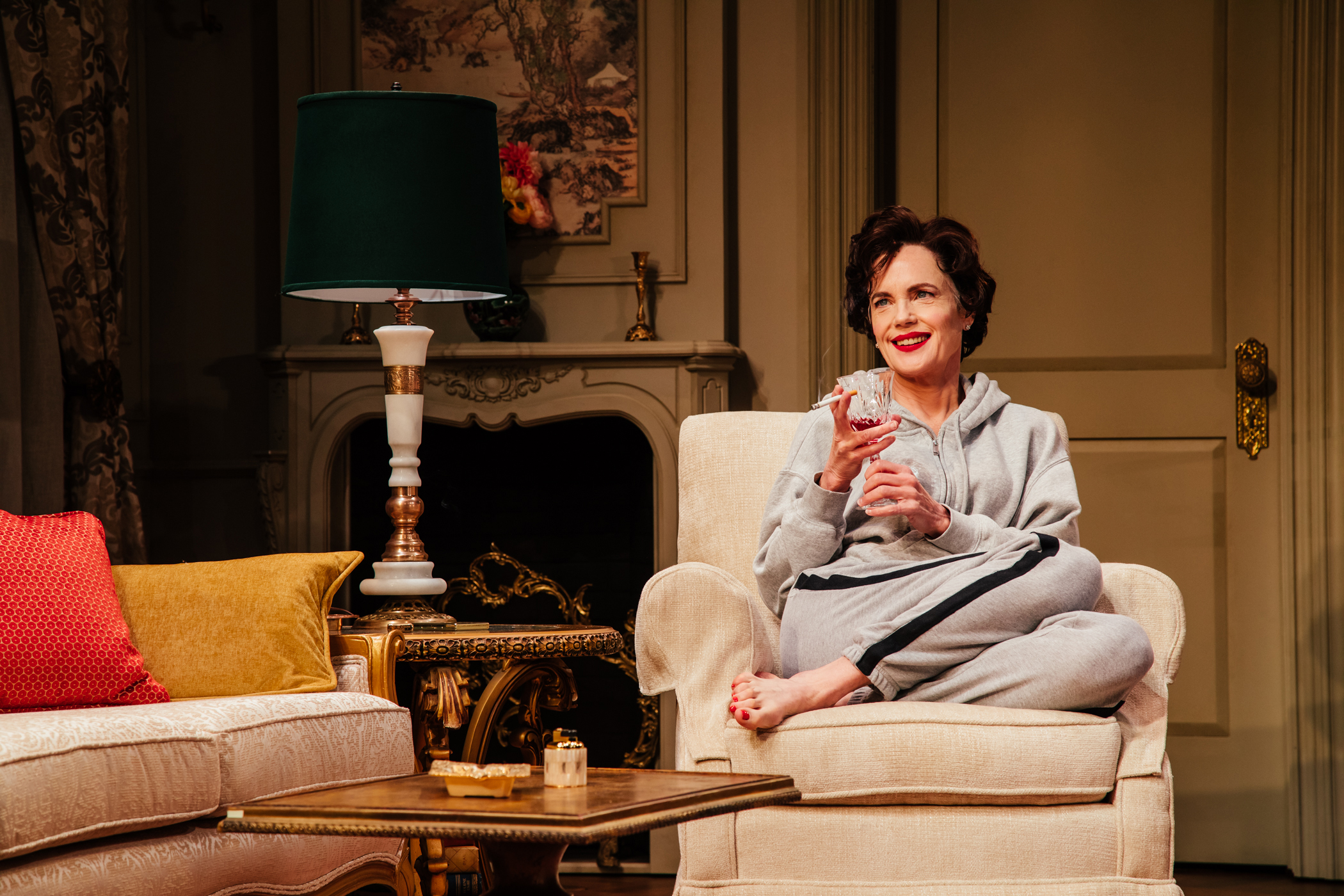
In particular, Ava Gardner and Frank Sinatra’s relationship remains one of Old Hollywood’s most volatile and mythic romances; a union fueled by passion, artistry, and equal measures of chaos. In many ways, their bond lies at the emotional center of AVA: The Secret Conversations. McGovern is quick to note that Gardner’s marriage to Sinatra was far from a simple love story. “Is it possible for the relationship to truly be healthy when two individuals are at that high a level of fame?” McGovern reflects. “I think that the play suggests it might not be impossible, but it’s very, very, very, very difficult.” Their union carried the weight of immense celebrity.
Still, McGovern emphasizes, “She experienced a lot of the things that any sex object feels…their personality has been stripped for projection,” and that inevitably tested even a union as intense as Gardner and Sinatra's. McGovern does not flatten Gardner’s experience; she lets it remain uneven and complex. At the end of the piece, she hopes audiences will feel what Gardner lost and what she held on to.
With all this unfolding live on stage, McGovern has rediscovered something fundamental: the thrill and volatility of theatre. “Everything I’ve ever done on film is just like the first draft of a performance,” she said. “Whereas this is the deeply felt fifth draft.” In cinema, only one shot lives on; theatre offers the chance for rewrites.
Though unlike film, nothing lingers afterward—which to McGovern enables her to inhabit the creative moment fully. “Every day is a creative act,” she says. “Even if I’m not performing, I’m hacking away at the garden, or whatever. Everything counts, in terms of experience.” For McGovern, creativity is not something you clock into; it is a way of moving through life, absorbing, responding, shaping. It’s that same energy she recognizes in Ava Gardner, a woman who refused to be fixed in place, who lived and loved as fiercely as she worked.
Like Ava, McGovern isn’t interested in preserving herself in amber. She’s after something more immediate, more honest: a life lived in motion, and an art that breathes with it. “That’s the kind of energy I love. And I’m addicted to it.”


Aaron Costa Ganis in Ava: The Secret Conversations

Aaron Costa Ganis in Ava: The Secret Conversations

Aaron Costa Ganis in Ava: The Secret Conversations

Aaron Costa Ganis in Ava: The Secret Conversations

Ryan W. Garcia in Ava: The Secret Conversations

Ryan W. Garcia in Ava: The Secret Conversations

Aaron Costa Ganis in Ava: The Secret Conversations

Aaron Costa Ganis in Ava: The Secret Conversations

Elizabeth McGovern in Ava: The Secret Conversations

Aaron Costa Ganis and Elizabeth McGovern in Ava: The Secret Conversations

Elizabeth McGovern in Ava: The Secret Conversations

Aaron Costa Ganis in Ava: The Secret Conversations

Aaron Costa Ganis in Ava: The Secret Conversations
Aaron Costa Ganis and Elizabeth McGovern in Ava: The Secret Conversations

Aaron Costa Ganis and Elizabeth McGovern in Ava: The Secret Conversations

Aaron Costa Ganis and Elizabeth McGovern in Ava: The Secret Conversations

Elizabeth McGovern in Ava: The Secret Conversations

Elizabeth McGovern in Ava: The Secret Conversations

Elizabeth McGovern in Ava: The Secret Conversations

Aaron Costa Ganis in Ava: The Secret Conversations


Jeremy-Daniel.jpg)


