


It has been 10 years since Hamilton rocketed to the top of the musical theatre industry, dominating just about everything (and everyone) in its path. When it began performances downtown at the Public Theatre in January 2015, it was a word-of-mouth smash hit, picking up “you have to go see this” acolytes from the taste makers that flooded into the 300-seat venue at every performance. By the time it reached Broadway in July, it had evolved into the musical of its generation, shifting the industry landscape through the sheer force of its influence and popularity. The Greatest Generation had Oklahoma!, The Silent Generation had Hair, Baby Boomers had The Phantom of the Opera, Generation X had RENT, and (as became abundantly clear) Millennials had Hamilton.
Eleven Tony Awards, a Grammy, and a Pulitzer later, Hamilton has become a lasting mainstay on the boards. Now the 16th longest-running show in Broadway history, it continues to regularly sell out, and earlier this year, Hamilton: The Original Broadway Cast Recording became the first (and so far, the only) original cast album to ever log 500 straight weeks on the Billboard 200 chart. Three hundred thirty-five shows have opened and closed on Broadway since Hamilton opened August 6, 2015, and yet it remains a gleaming gold landmark on 46th Street, where fans continue to swarm the Richard Rodgers Theatre night after night.
But where are things, emotionally, 10 years on? This Playbill staff writer attended the official 10th anniversary matinee performance August 6, alongside our social media coordinator Meredith Ammons, to see what it felt like to witness the work with fresh eyes.

Full disclosure: I was a serious Hamilton fan back in 2015. I was 17 when the musical premiered, and a lifelong history nerd and theatre kid, which means I was firmly in the center of the venn diagram of interest for Lin-Manuel Miranda’s epic, albeit on the younger end of the original popularity burst. From my hometown in Ohio, I would parse through the contents of the cast recording online, breaking down every beat of Miranda's narrative before switching over to the various television performances and professional b-roll footage that was posted online so I could analyze the actors interpretations as well. For my 18th birthday, my mother surprised me with tickets to see the original Broadway cast, an experience that remains indelibly imprinted upon my psyche. Looking back, I can see that Hamilton taught me how to be a dramaturg, which led me directly to my current career as a theatre writer and historian.
And then, without even wholly realizing it had happened, I let go of it.
By August 2016, only a few months after Hamilton’s ceremony dominating turnout at the Tony Awards, I had set it to the side. I left Ohio, moved to New York, and began college. Other fascinations came into focus, and the analytical skills I had honed in appreciation of Hamilton were soon turned on shows like Natasha, Pierre, and the Great Comet of 1812, while my Hamilton t-shirt lay in the back of my dresser drawer. Despite living in the greatest city in the world for the last nine years, I never went back to the Rodgers. In a moment of spontaneous curiosity, I saw one performance of the first national tour while visiting my mother, but otherwise? Hamilton was a part of my foundation, not my future.
Flash forward to August 6, 2025, as Meredith and I fought our way through the crowd to pick up our tickets for the matinee anniversary performance (the matinee performance was for fans, while the evening performance was an invite-only friends-and-family affair).
The overwhelming majority of the audience for the afternoon performance were lottery winners: fans of the show had come from near and far to attend for just $10, a special activation of the production’s Ham4Ham lottery policy that has been in place since it came to Broadway. Before we even entered the theatre, the energy was off the charts. As the lengthy line snaked around the sidewalk and through the Marriott Hotel breezeway half a dozen times, I was surrounded by eagerly patient conversations as fans formed brief friendships in the interim. Every manner of theatregoer could be found in the breezeway, from the teenagers excitedly telling everyone in earshot that it was their first Broadway show, to the smiling older man who, when prompted, revealed that he had first seen Hamilton in its first week at the Public—he had gone to support his former student Leslie Odom Jr. As the front house staff of the Rodgers swiftly security checked and shepherded everyone inside, it was impossible to not be swept up in the collective excitement: Meredith and I even opted to spring for celebratory Shirley Temples in souvenir cups, sans the edible gold glitter the bartenders were cheerily offering.
Once we reached our seats, a surprise was waiting for us: a sturdy, special edition “HamilTEN: History Has Its Eyes On You” silver and black tote bag was draped over the back of every chair in the house. Inside lay a special Playbill with the Hamilton x Canva-winning cover design, as well as the finalist designs throughout the interior of the bill. As the auditorium steadily filled, the excitement coursing through the space reached such a pitch that the audience burst into applause and cheers before the house manager had even motioned for the lights to dim.
Much has changed in the last decade, and like all live art, Hamilton has changed with it. It was the diamond of the Obama Administration, a faceted encapsulation of the hope that motivated the millennial generation as they came of age. Now, 10 years down the line, that generational hope has crystallized into something far sharper, with the following generation, Zoomers, cutting through with dangerous finesse. While naysayers have criticized the earnestness embedded in Hamilton, in 2025, much of that tenderness has grown tough.

My memory of the original Broadway cast remains vivid, thanks in part to the proshot streaming now on Disney+, and as the current cast flooded the stage for the opening number, it was immediately obvious that things were different. Not textually: everyone sang the music and lyrics Miranda had originally written, danced the choreography originally put together by Andy Blankenbuehler, and hit their marks with the same technical blocking that was established a decade ago. What was shockingly, strikingly different was the subtext at play: the variations in performance interpretation made a show I have textually memorized feel not only fresh, but surprising.
It certainly helped that the cast was performing to one of the most electric audiences they’ve ever had. From the moment Tony nominee Jarrod Spector came on over the loudspeaker in character as King George III to issue an order that the audience turn off their cell phones, the theatre was awash in expressions of glee. When Trey Curtis, who currently plays Alexander, made his first appearance in the opening number, the ovation put a stop to the action for a significant stretch of time, the cast frozen in place as the audience screamed out their adoration. Throughout the performance, conductor Ian Weinberger had to plow forward through the applause simply to keep the show from stretching out into an endless oblivion of clapping. If there is anything I can say with utmost certainty about the anniversary performance, it is that the HamilFans made their feelings loud and clear, for all to hear.
Taking on a role as iconic as Alexander Hamilton is a difficult thing, especially when the role was originally written for and performed by the person who wrote the piece. Like many writer-performers, Miranda left some of the trickiest material in the show on his plate, rather than leaving it to someone else to grapple with. As Alexander, Curtis has found his own unique flow, infusing Miranda’s oft-imitated cadence with new shades of current hip-hop MC’s like Tyler, the Creator and PlayThatBoiZay. What sets his Alexander dramatically apart from Miranda’s, however, is the energy that propels him.

If you have ever spent a substantial amount of time with a person who has lived through deep trauma, you know the look. That hungry, probing look that never fails to see just beyond sense and reason, glimpsing a reality others are oblivious to. It’s a desperate, haunted look, and when wielded by Curtis, it is rib-tightening. It’s the look that unites many of 2025’s strongest warriors for change, from Parkland shooting survivor David Hogg to climate activist Greta Thunberg.
That look, equal parts fury and resignation, isn’t exactly new: look at changemakers across the decades, and you will see that look over and over again. It’s the look of revolution, of churning tides, and Curtis’s use of it instantly sets his Alexander apart from Miranda’s take, which was grounded in a sense of hope Curtis’ Alexander appears to have abandoned in the floodwaters of Nevis. His Alexander would do anything to improve his world, but there is always, always, always another trial waiting for him on the other side, his labors never finished. It borders on Shakespearean tragedy, less Macbeth (who is directly evoked in the show) than Hamlet, a monument to the resentments that often brew within the righteous.
That’s a whole lot of words to say Curtis was marvelous, but he wasn’t the only performer firing on all cylinders. Ebrin R. Stanley had the audience in the palm of his hand from his first entrance as Hercules Mulligan through his exit as James Madison, with his fully committed scattering of two small rose petals during the wedding scene earning some of the most organic giggles of the night. Cherry Torres’ harmony work as Peggy Schuyler and Maria Reynolds sent shivers through the audience, with a woman in the back orchestra hissing out an appreciative “god DAMN” as Torres crested the bridge of “Say No To This.” Jarrod Spector’s King George III was a PhD level masterclass on phonetic specificity and the power of a well-placed facial twitch. And, of course, Tamar Greene’s rendition of “One Last Time” as George Washington brought this critic to tears.

Hamilton has been the same for the last decade. But we aren’t the same audience and, with one exception, these aren’t the same performers. When the lone original cast member still with the production, Thayne Jasperson, took to the podium for his solo sequence as Samuel Seabury in “Farmer Refuted,” what began as a wave of applause for Jasperson soon crescendo’d into hushed awe for Curtis’ Alexander as he handily shut down Seabury’s argument for apathy. Previously a narrative footnote, the anniversary performance rendition of “Farmer Refuted” felt like a thesis statement for the entire production. Once we reached the Cabinet Battles in Act 2, the audience felt primed to leap into action themselves.
By the time Miranda ran out on stage to give a curtain call speech, the audience was at a rolling boil, reaching decibel levels that rival some of the most raucous demonstrations I have attended. Like Alexander, the audience is clearly hungry for revolution. Only time will tell if that revolution will wear an upper or lowercase r, but one thing is certain: Hamilton retains its ability to inspire action, creativity, and individual change, even a decade removed from the now bygone era it was written for. We may wear more callused souls than we did in 2015, but this show is still capable of piercing through. Hamilton isn’t perfect, and neither are we, but my prayer is that the anniversary audience, who streamed out of the Rodgers with tear-stained faces and wide smiles, take the energy that coursed through them at the performance, and redirect it out into their communities. Let them fold it into their art, their arguments, and their activism.
Passion needs direction, and as I learned through Hamilton 10 years ago, the best direction to go is up and out. This is not a moment, it’s a movement, so you’d better get a move on.

Jeffrey Seller and the company of Hamilton

Morgan Anita Wood and Denée Benton

Current and alumni company members of Hamilton

Renée Elise Goldsberry and Stephanie Umoh

Thomas Kail and current and alumni company members of Hamilton

Thomas Kail and current and alumni company members of Hamilton

Thomas Kail, Lin-Manuel Miranda, and current and alumni company members of Hamilton

Lin-Manuel Miranda and current and alumni company members of Hamilton

Lin-Manuel Miranda and current and alumni company members of Hamilton

Lin-Manuel Miranda and current and alumni company members of Hamilton

Current and alumni company members of Hamilton

Lin-Manuel Miranda and current and alumni company members of Hamilton

Current and alumni company members of Hamilton

Current and alumni company members of Hamilton

Current and alumni company members of Hamilton

Thayne Jasperson, Jasmine Cephas Jones, Phillipa Soo, and Jon Rua

Trey Curtis, Lin-Manuel Miranda, and current and alumni company members of Hamilton

Current and alumni company members of Hamilton

Current and alumni company members of Hamilton

Current and alumni company members of Hamilton

Current and alumni company members of Hamilton

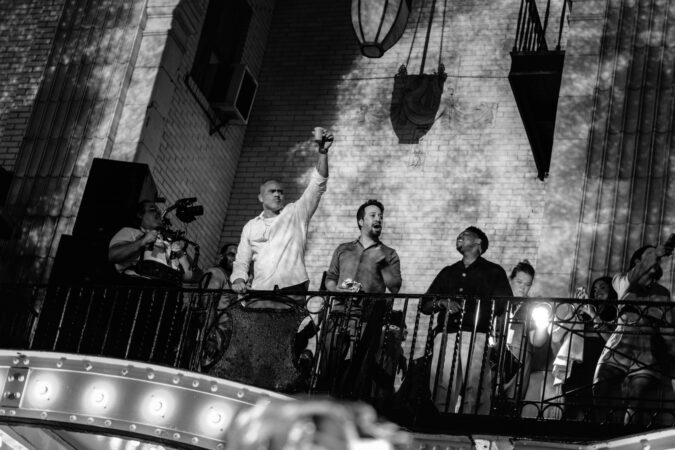
HamilTEN post-show block party

The Richard Rodgers Theatre

Lin-Manuel Miranda at the HamilTEN post-show block party

HamilTEN post-show block party

Phillipa Soo at the HamilTEN post-show block party

HamilTEN post-show block party

Ephraim Sykes at the HamilTEN post-show block party
Christopher Jackson, Lin-Manuel Miranda, and Ephraim Sykes at the HamilTEN post-show block party

Jasmine Cephas Jones, Renée Elise Goldsberry, and Hamilton alumni at the HamilTEN post-show block party

Jasmine Cephas Jones, Renée Elise Goldsberry, and Hamilton alumni at the HamilTEN post-show block party


Jeremy-Daniel.jpg)


